

Currently Empty: 0.00$
Phonics
Manner of Articulation
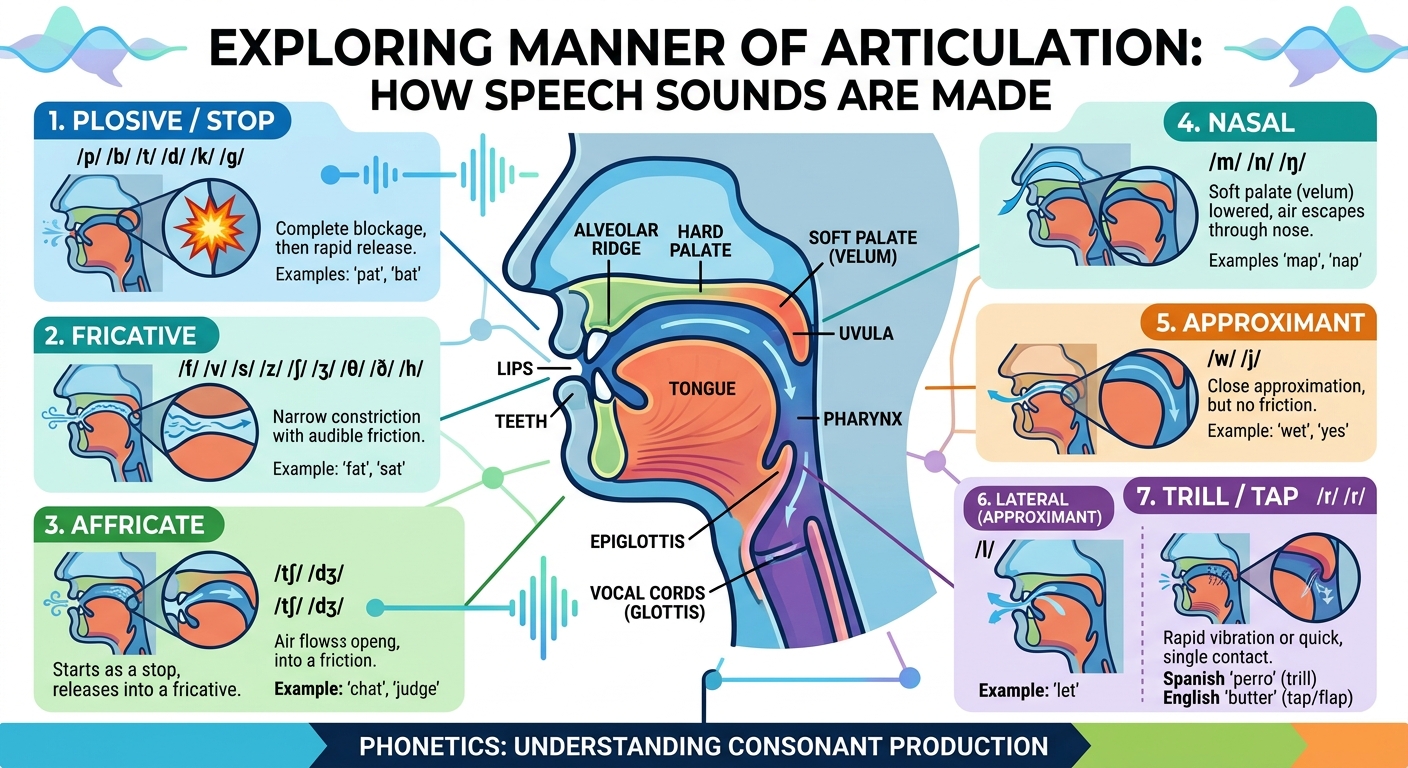
Manner of articulation is how airflow is blocked, narrowed, or redirected through the vocal tract—the entire air pathway where sound is shaped to produce consonants. When making a speech sound, air comes from our lungs, and our tongue, lips, and teeth shape it before it leaves our mouth. The manner of articulation is simply asking: Is that air stopped, squeezed, or free when we talk?
Think of a garden hose: you can block it, squeeze it, or let it flow. The water sound changes. Your mouth does the same thing with air.
In phonics, this helps children learn how letters sound. In Diction, this helps us to speak clearly.
There are six main manners of articulation.
Plosives/Stops:
Air is completely blocked, then bursts out like a small “pop” or “explosion.” This is like holding air behind a dam, then letting it go.
How: Lips, tongue, or throat completely block the air for a second, then release it.
Sounds:
- /p/
- /b/,
- /t/,
- /d/,
- /k/,
- /g/.
- WORDS: pat, bat, top, dog, cat, go. As you put your hand in front of your mouth and say “pat”, you will feel a puff of air. That is a plosive.

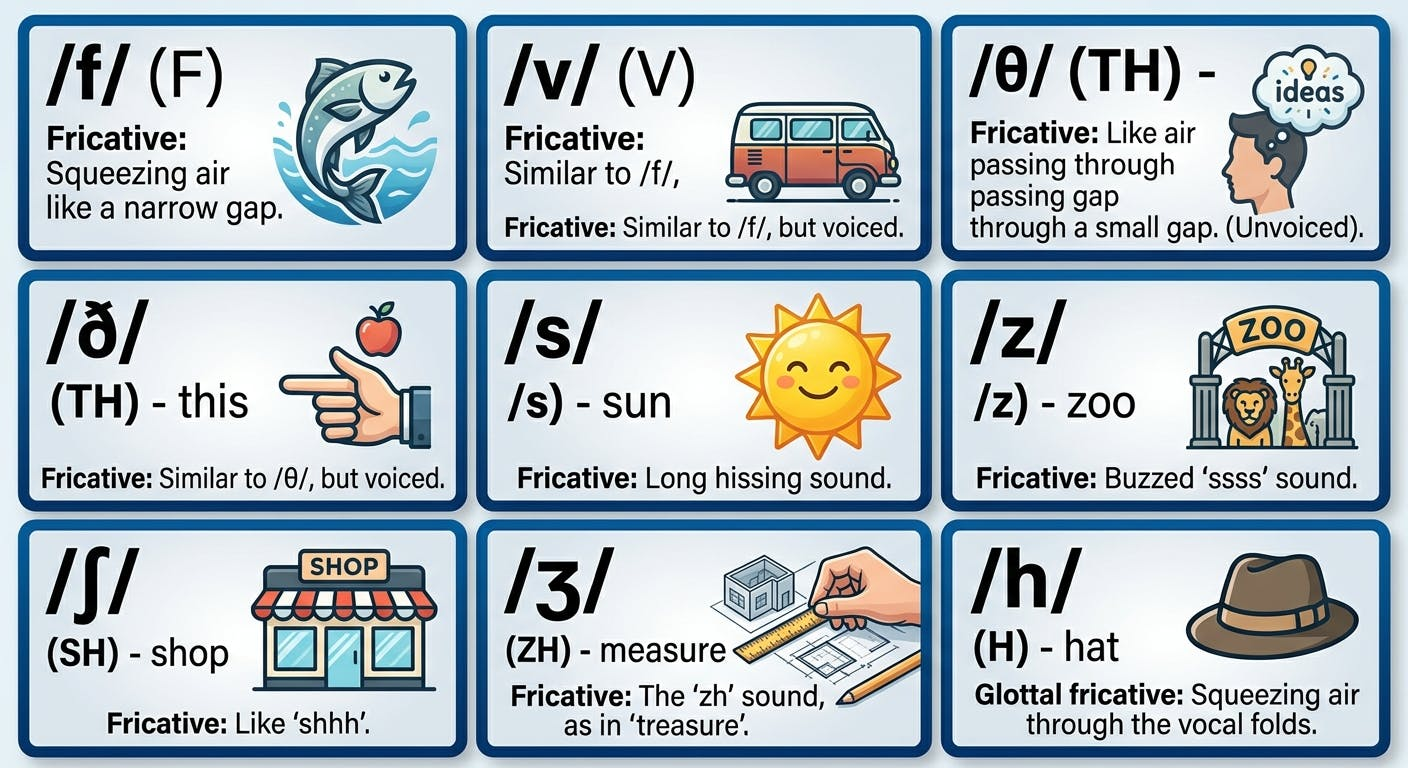
FRICATIVES:
You squeeze the air to make a continuous “hissing” or continuous friction sound. This is like forcing air through a narrow gap.
HOW: Two parts of your mouth come close together without fully touching. Air squeezes through the tight channel, creating friction.
SOUNDS:
- /f/ – fish
- /v/ – van
- /θ/ (“th”) – think
- /ð/ (“th”) – this
- /s/ – sun
- /z/ – zoo
- /ʃ/ (“sh”) – shop
- /ʒ/ (“zh”) – measure
- /h/ – hat
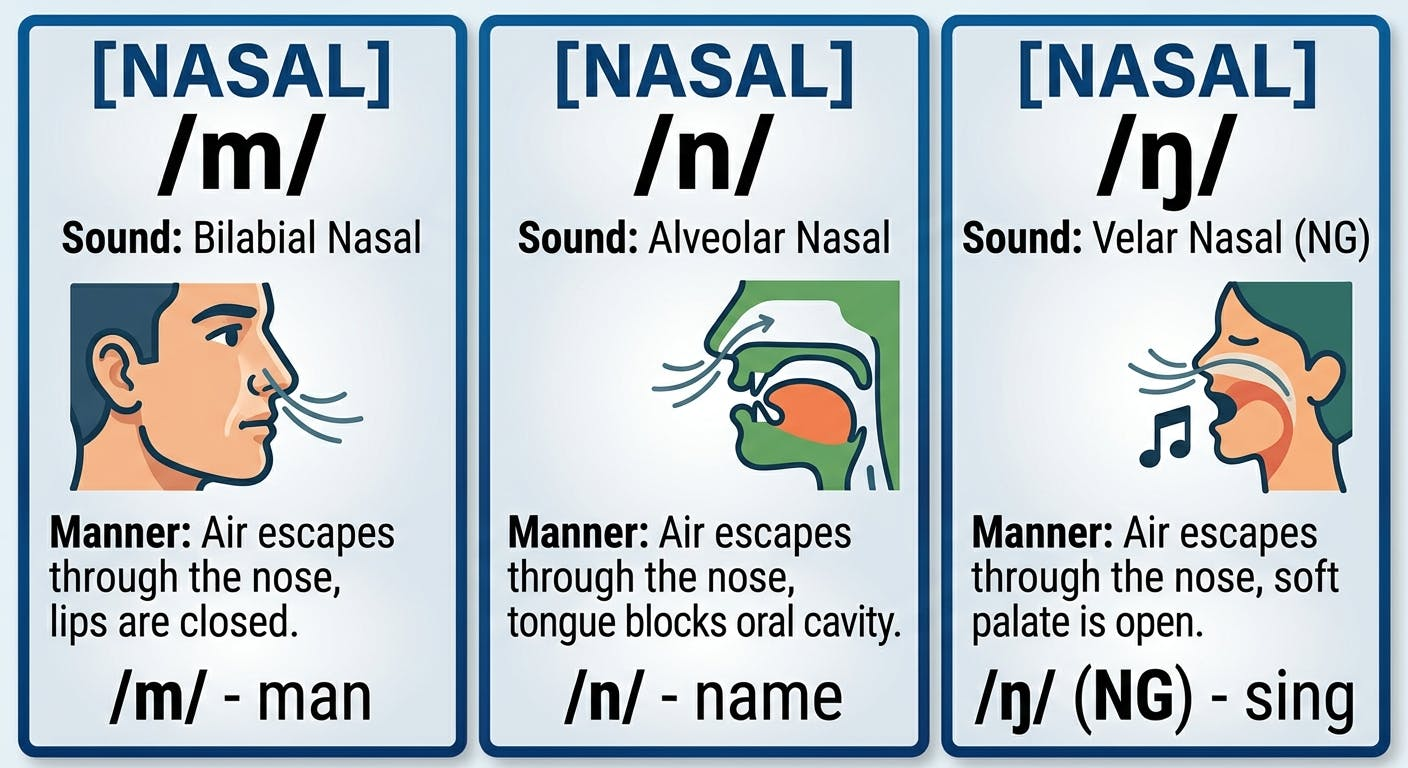
NASALS
Let the air go through the nose. The mouth is blocked, so all the air escapes through the nasal cavity.
HOW: Your lips or tongue block the air inside your mouth, while your soft palate (velum) lowers to let air flow out through your nose.
SOUNDS:
- /m/ – man
- /n/ – name
- /ŋ/ (“ng”) – sing
TEST IT: Pinch your nose closed with your fingers and try to say “mmmm”—you won’t be able to finish the sound!
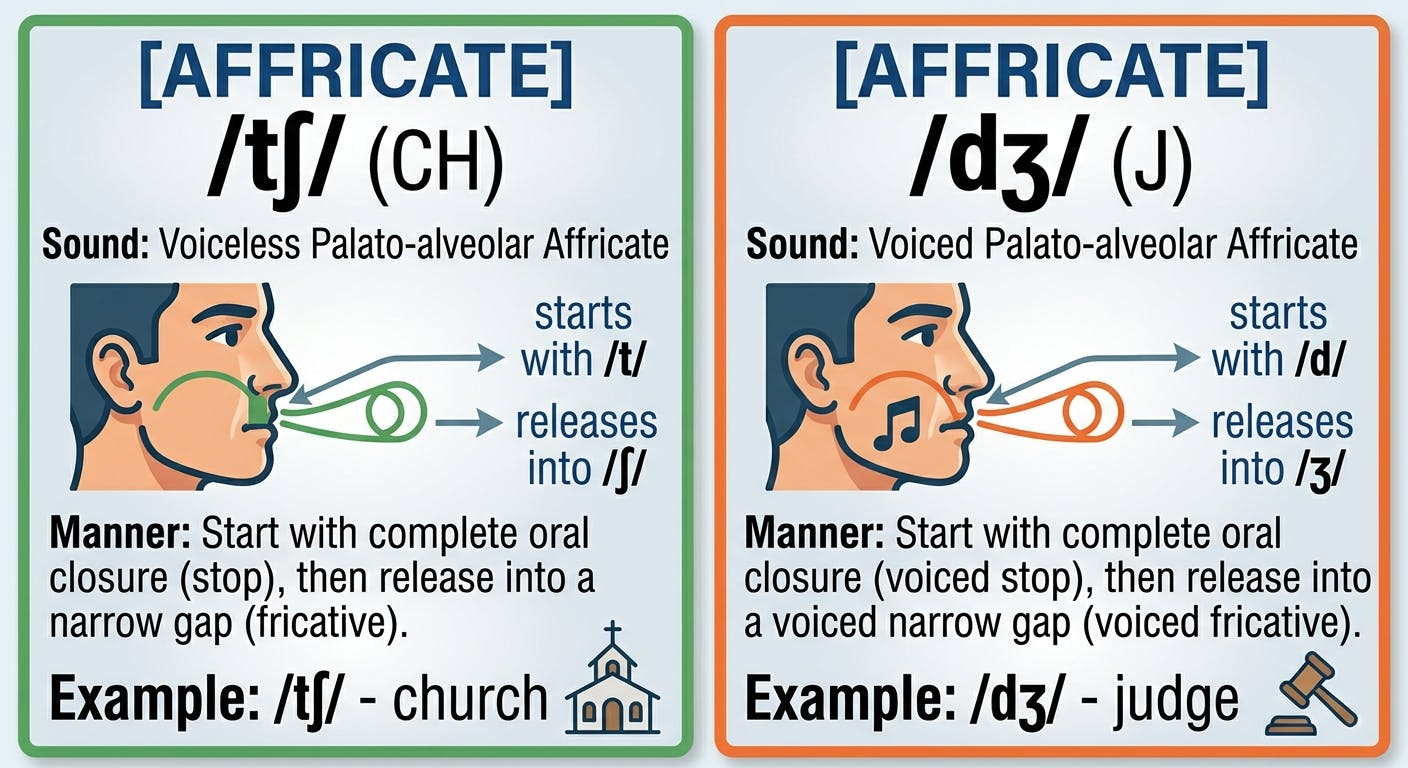
AFFRICATES:
A stop + a fricative combined. It is a two-in-one sound that starts by completely blocking the air, then releasing it through a narrow gap with friction.
HOW:
- Your tongue blocks the air behind your teeth (like a stop).
- Instead of a clean “pop”, you release the air slowly into a “hissing” sound (like a fricative).
SOUNDS:
- /tʃ/ (“ch”) – church (starts with /t/ and releases into /ʃ/)
- /dʒ/ (“j”) – judge (starts with /d/ and releases into /ʒ/)
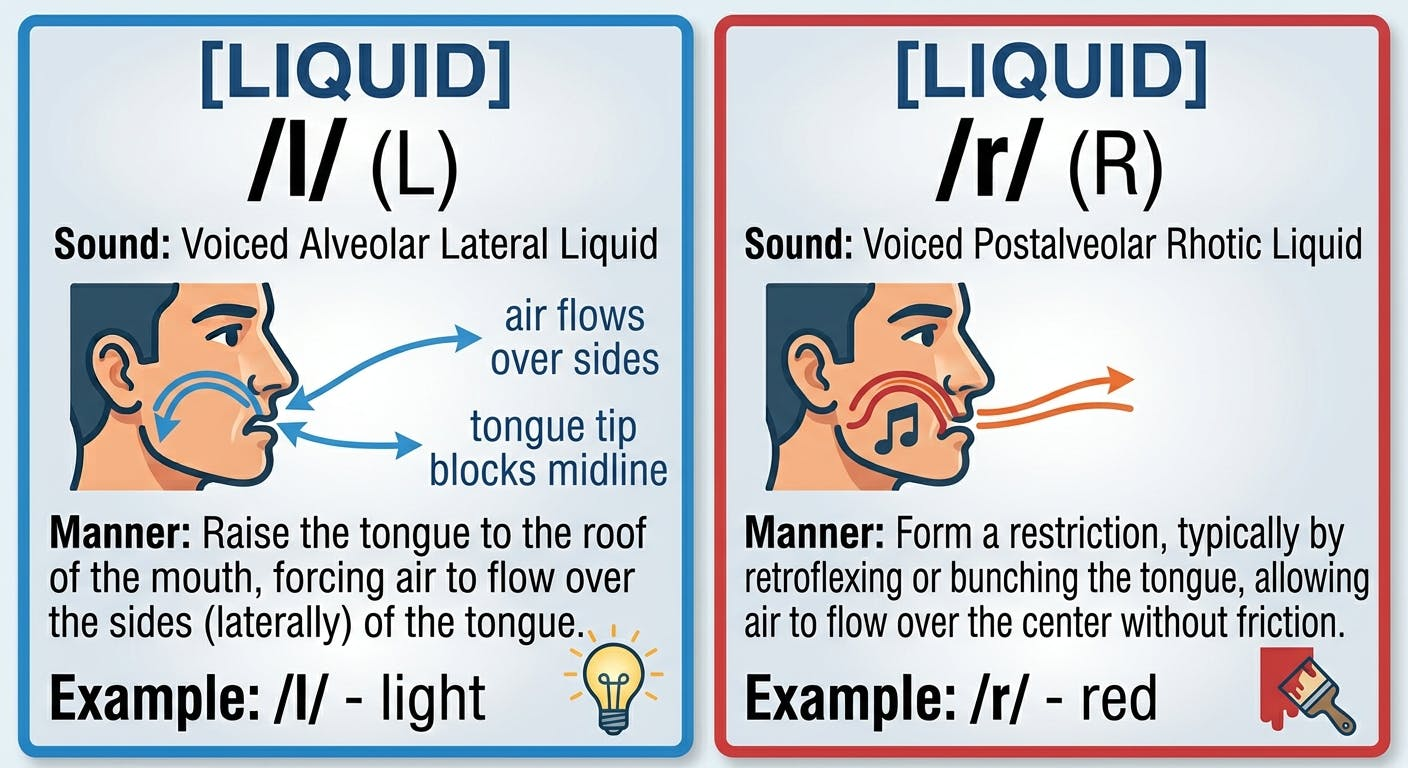
LIQUIDS:
Let the air flow smoothly around or over the tongue. These sounds are smooth and “flowy” with no friction or complete air block.
HOW:
- For /l/, the tip of your tongue touches the roof of your mouth, and air flows around the sides of your tongue.
- For /r/, your tongue curls back or bunches up without touching the top, letting air flow over the middle.
SOUNDS:
- /l/ – light
- /r/ – red
TEST IT: Say “lala” and “rara”—notice how your tongue moves freely while the air keeps flowing continuously!
GLIDES (SEMI-VOWELS):
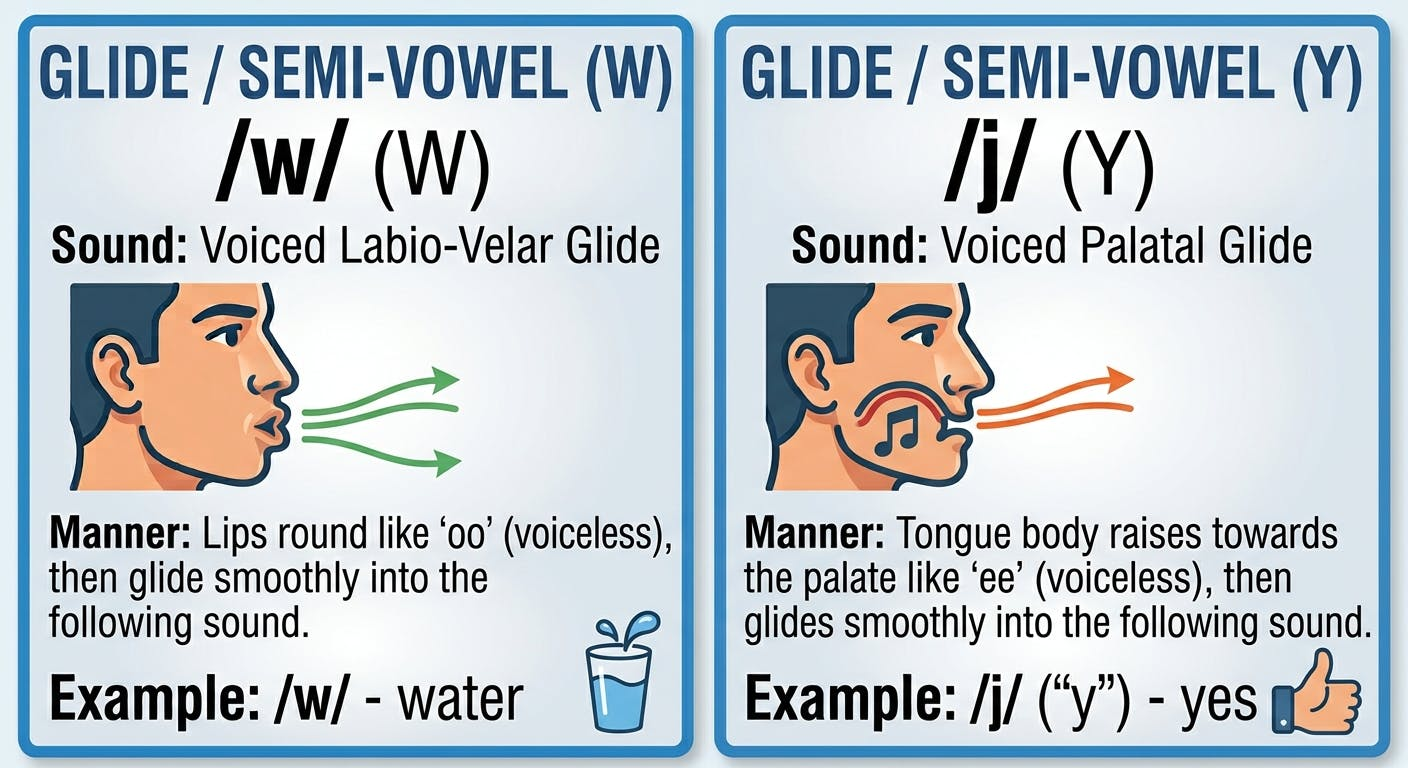
Air glides out smoothly with almost no obstruction. These sounds function like consonants, but your mouth moves very similarly to how it makes vowels.
HOW: Your articulators start in one position and glide continuously into the position of the following vowel.
SOUNDS:
- /w/ – water (lips round, similar to an “oo” sound)
- /j/ (“y”) – yes (tongue raises, similar to an “ee” sound)
TEST IT: Say “wow” or “yes”—notice how your lips round for /w/ and your tongue rises for /y/.
How to Clearly Speak and Correct Spelling and Pronunciation Errors
When a child understands how to articulate sounds, both speech clarity and reading become much easier. Many pronunciation and spelling errors happen when a child uses the wrong manner of articulation.
Common Examples:
- /th/ vs. /t/ (Fricative vs. Stop): Saying “tink” instead of “think”. Here, a stop (/t/) is incorrectly used instead of a fricative (/θ/). Instead of popping the air, put your tongue between your teeth and let the air hiss out continuously.
- /p/ vs. /f/ (Stop vs. Fricative): Saying “pan” for “fan”. A stop (/p/) completely blocks the air, while a fricative (/f/) squeezes air through a small gap.
- /l/ vs. /r/ (Lateral vs. Rhotic Liquid): Saying “lice” instead of “rice”. Both are liquids, but for /l/, the tongue tip touches the roof of the mouth, while for /r/, it does not touch.
Good diction comes from using the correct manner of articulation so words are spoken clearly rather than “swallowed.” Simply put, manner of articulation is the “how” of speaking.