
Currently Empty: 0.00$
Child Development
Guiding Kindergarteners to Master Helping Verbs (Am, Is, Are)
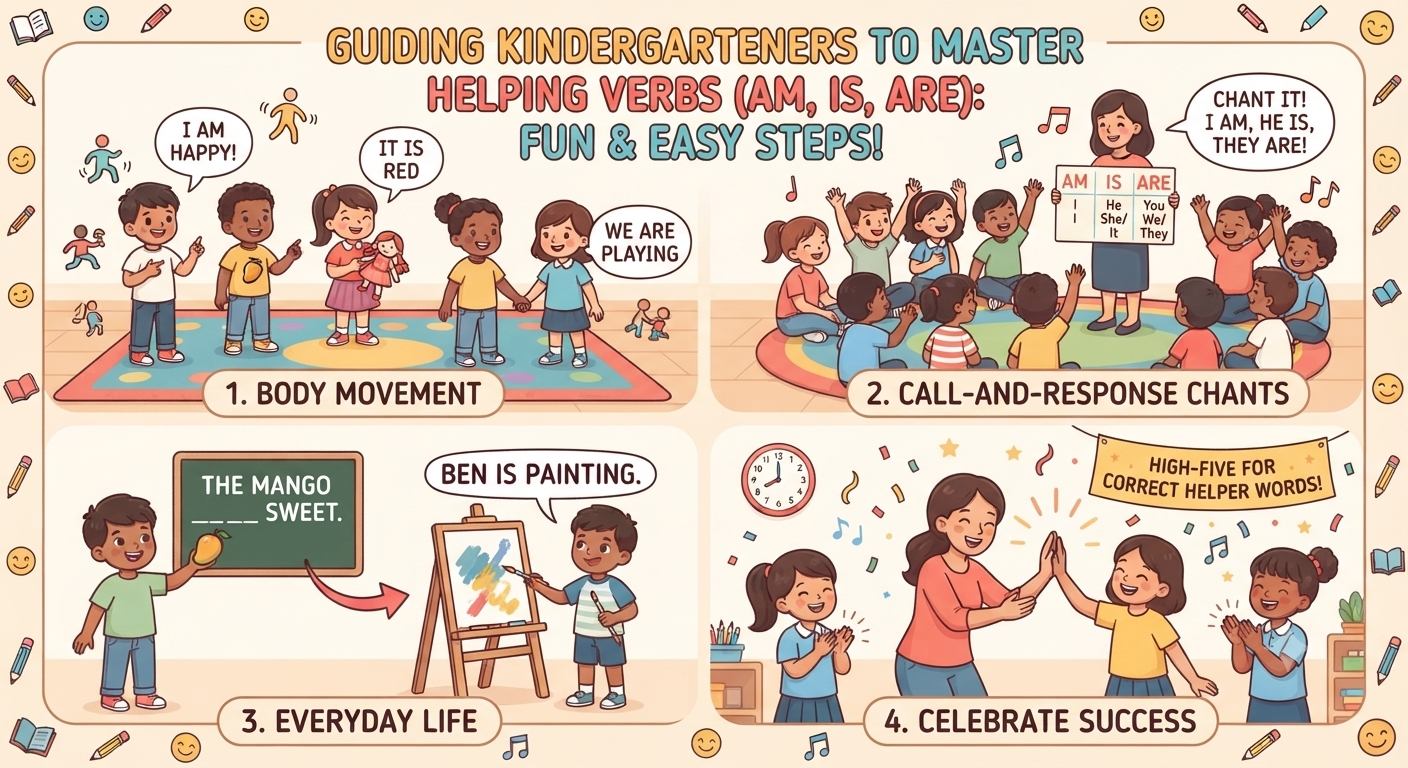
When teaching young learners about basic grammar, it is necessary to turn abstract rules into interesting, concrete experiences. Teachers and parents will find that introducing helping verbs such as am, is, and are can be a pleasant experience if they use the correct approach. Since children in kindergarten learn most effectively through movement, repetition, and situations relevant to their lives, it is easy for teachers to incorporate these helping verbs into everyday routines both in the classroom and at home.
Understanding the Big Three: Am, Is, and Are
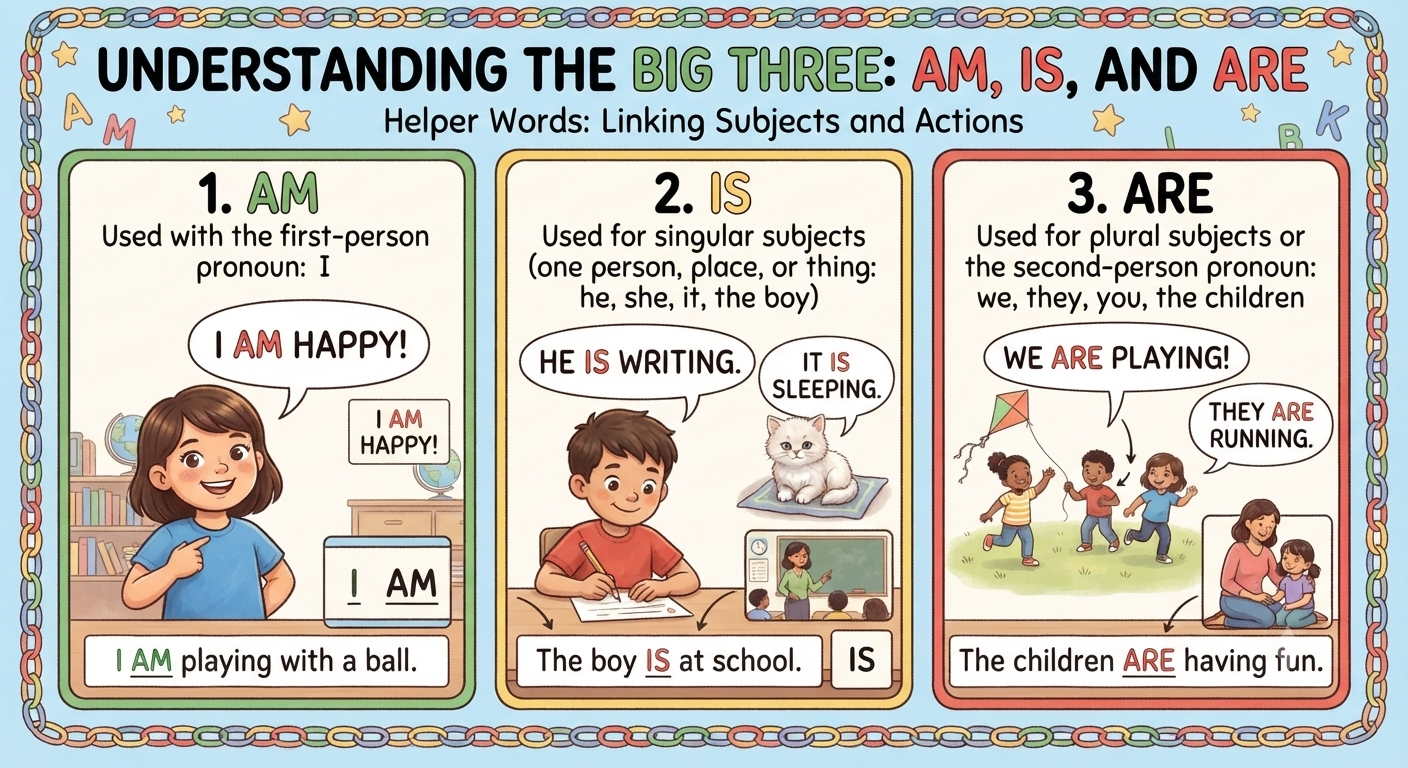
It is helpful to know how these helper words work when you are going to be giving children lessons. Helping verbs serve as links in a sentence, joining the subject to the action or state it is undergoing.
- Am is always used with the first-person pronoun “I”.
- Is is used for singular subjects (one person, place, or thing, such as he, she, it, or the boy).
- Are is used for plural subjects or the second-person pronoun (such as we, they, you, or the children).
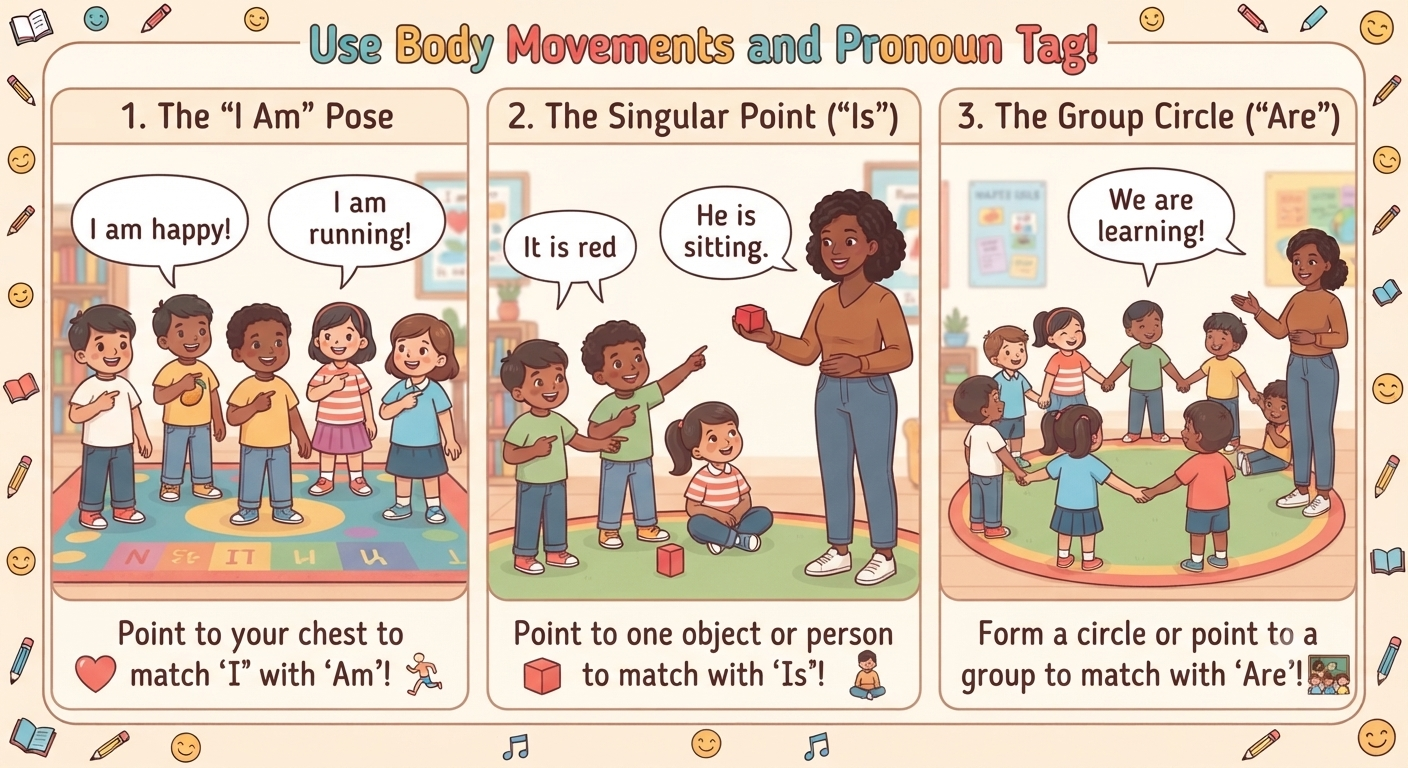
Step 1: Use Body Movements and Pronoun Tag
Children learn grammar faster when their bodies are involved. Turn sentence-building into a physical game of matching pronouns to their correct helper.
- The “I Am” Pose: Have every child point proudly to their chest and say, “I am happy!” or “I am running!” This solidifies the strict pairing between I and am.
- The Singular Point (“Is”): Hold up a single object, like a pencil or a toy doll, or point to one classmate. Prompt the children to say, “It is red” or “He is sitting.”
- The Group Circle (“Are”): Ask the children to hold hands in small groups or to point at the whole class, and lead them in saying either “We are learning” or “They are playing”.
Step 2: Leverage Call-and-Response Chants
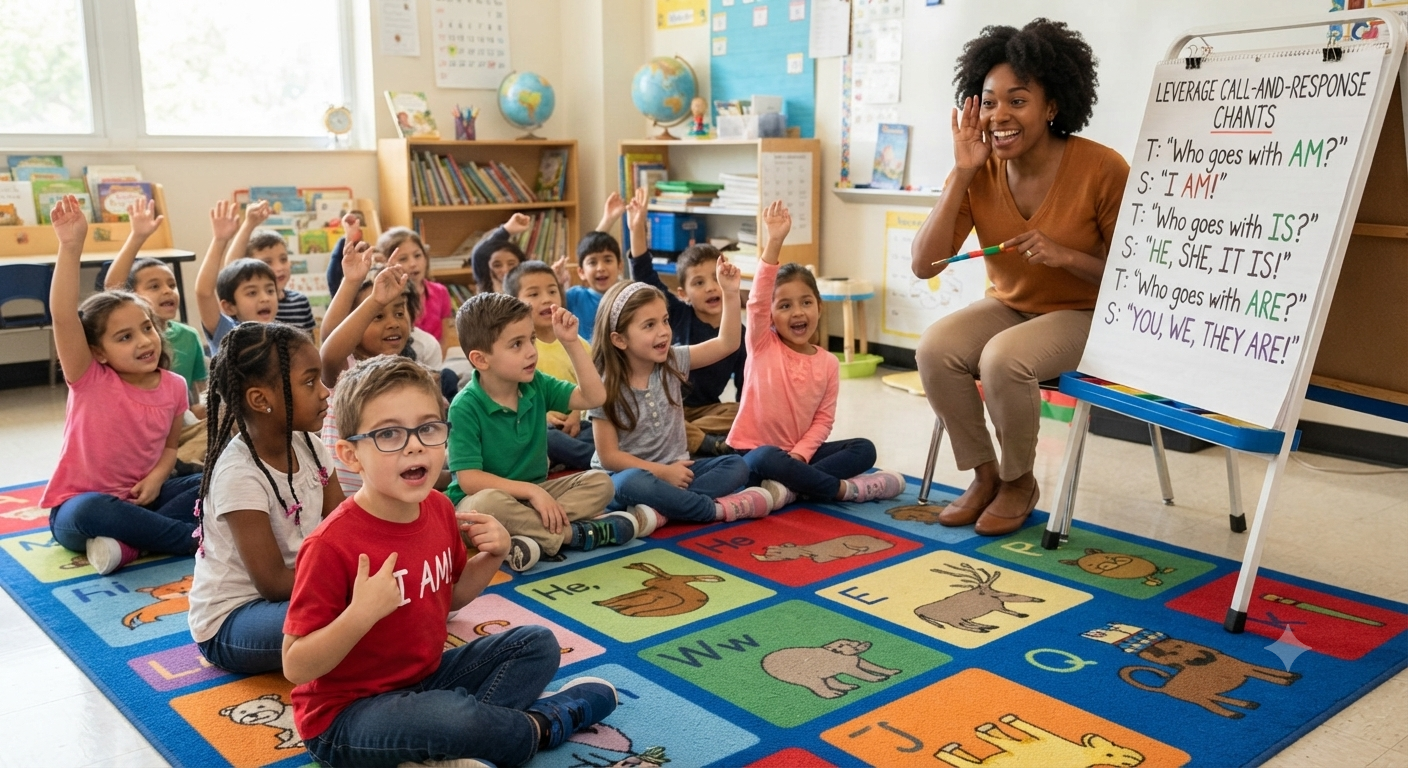
Repetition helps form auditory memory; therefore, create simple, rhythmic chants that children can chant together during morning meetings or circle time.
- Teacher: “Who goes with am?”
- Students: “I am!”
- Teacher: “Who goes with is?”
- Students: “He, she, it is!”
- Teacher: “Who goes with are?”
- Students: “You, we, they are!”
Step 3: Relate to Everyday Classroom Life
Context is key to keeping young learners interested. Frame grammar exercises around familiar objects and daily routines found in classrooms and homes.
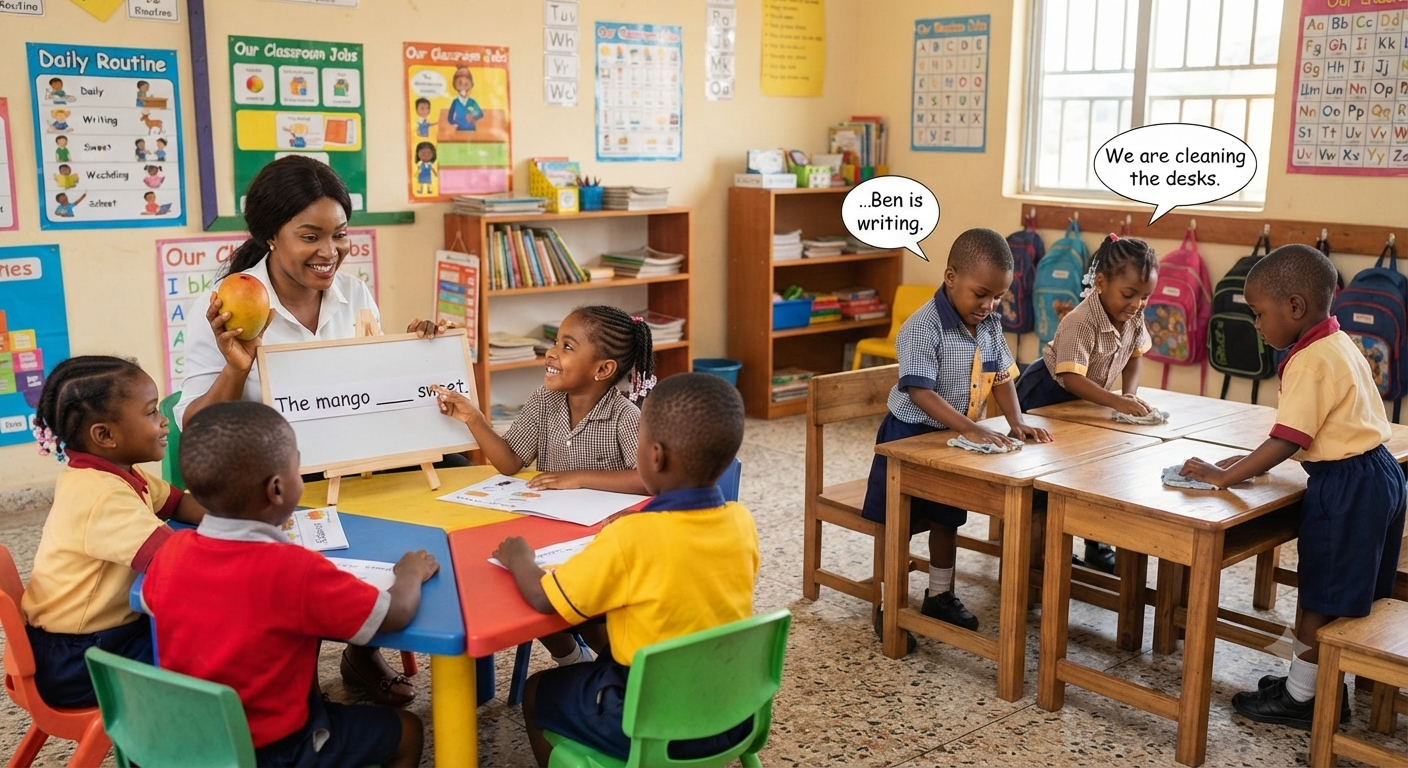
- Use local items during show-and-tell. Hold up a mango and ask a student to complete the sentence: “The mango ___ sweet.” When the child correctly answers, “The mango is sweet,” reinforce the concept.
- Look around the room and build sentences about daily actions: “Ben is writing,” or “We are cleaning the desks.”
Step 4: Keep It Short and Celebrate Success
Since children in kindergarten have short attention spans, direct grammar lessons should last only about 5 to 10 minutes each day. Give your child a high-five or clap as a reward each time they correctly use am, is, or are in conversation. Young learners will naturally become proficient in these auxiliary words when physical activity is incorporated into their everyday speaking.
Teaching kindergarteners helping verbs the right way
The Grammar Fundamental Course
Whether you teach young students or want to improve your own skills, this course gives you a clear plan and interactive tools to make grammar easier.
Core Skills:
- Basics: Master the alphabet, vowels, and consonants.
- Grammar: Learn nouns, pronouns, adjectives, verbs, and prepositions.
- Writing: Gain expertise in sentence structure, word order, and punctuation.
Why Take the Course?
Whether you teach children or want to improve your grammar, this course makes learning grammar simple and fun.
- Easy teaching methods: Follow a clear, step-by-step guide to teach grammar without stress.
- Complete foundation: Learn everything from A to Z, including the parts of speech and how to build strong sentences.
- Ready-to-use activities: Save time with hands-on, interactive lessons that children will enjoy.
- Better writing: Improve your sentence structure and punctuation to communicate more clearly and confidently.
- Earn a certificate: Get an official certificate to show your new skills and success.