
Currently Empty: 0.00$
Child Development
Teaching Verbs Through Action
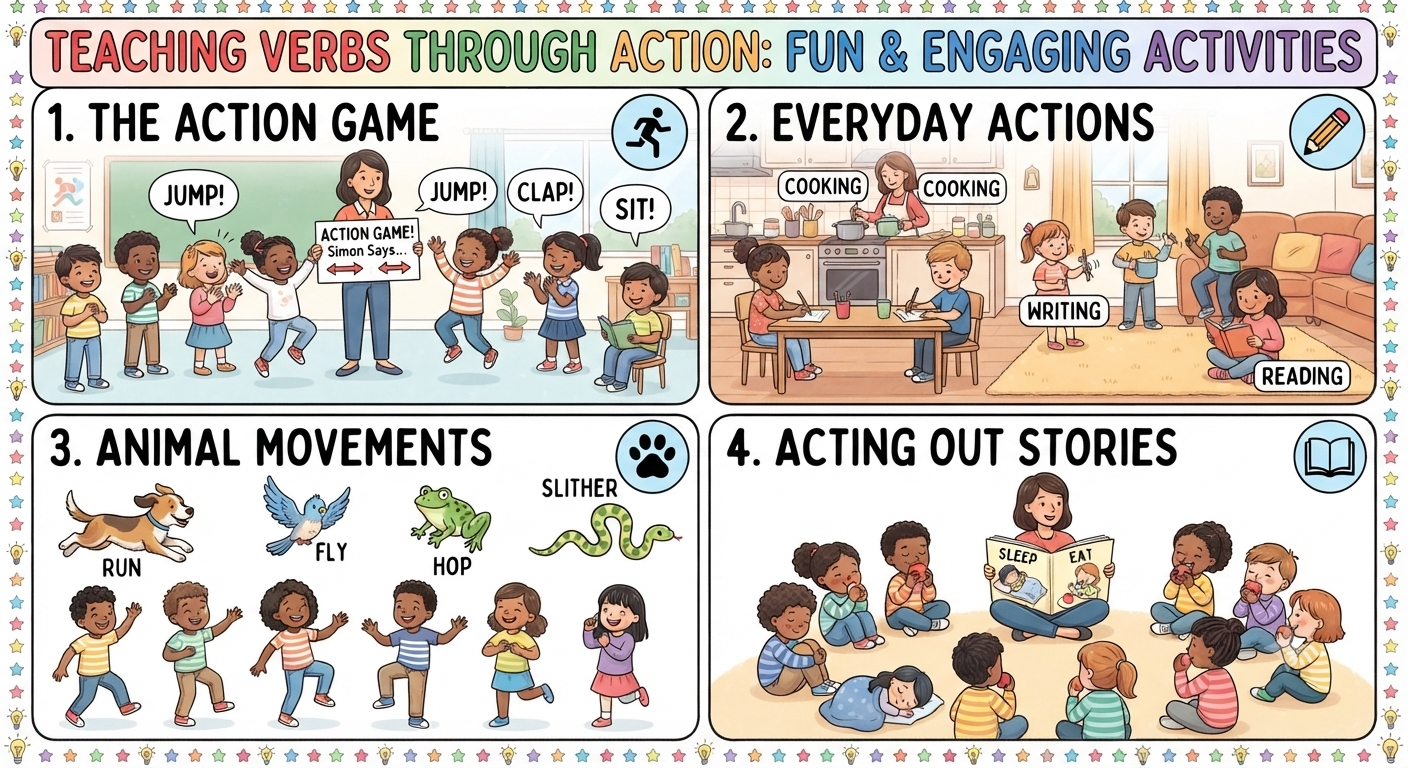
Grammar may seem abstract to young children, but verbs are the easiest part of speech to teach because children naturally enjoy movement. In classrooms and homes, verbs are present in every activity. Use physical activities, local games, and daily routines to demonstrate that a verb is a doing word.
Below is an engaging, activity-based approach to teaching verbs.
1. The Action Game
Children learn best through movement. Begin by making verbs part of a physical response game.
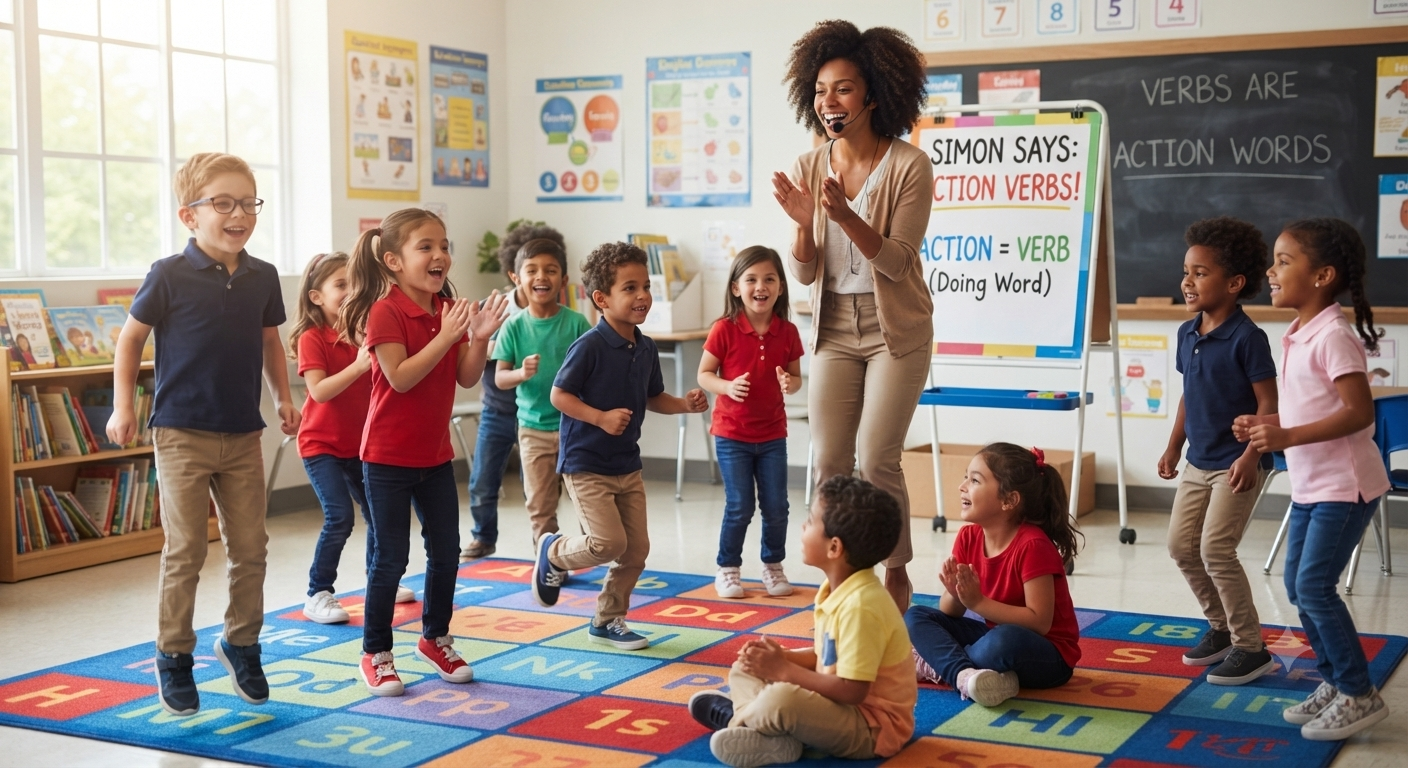
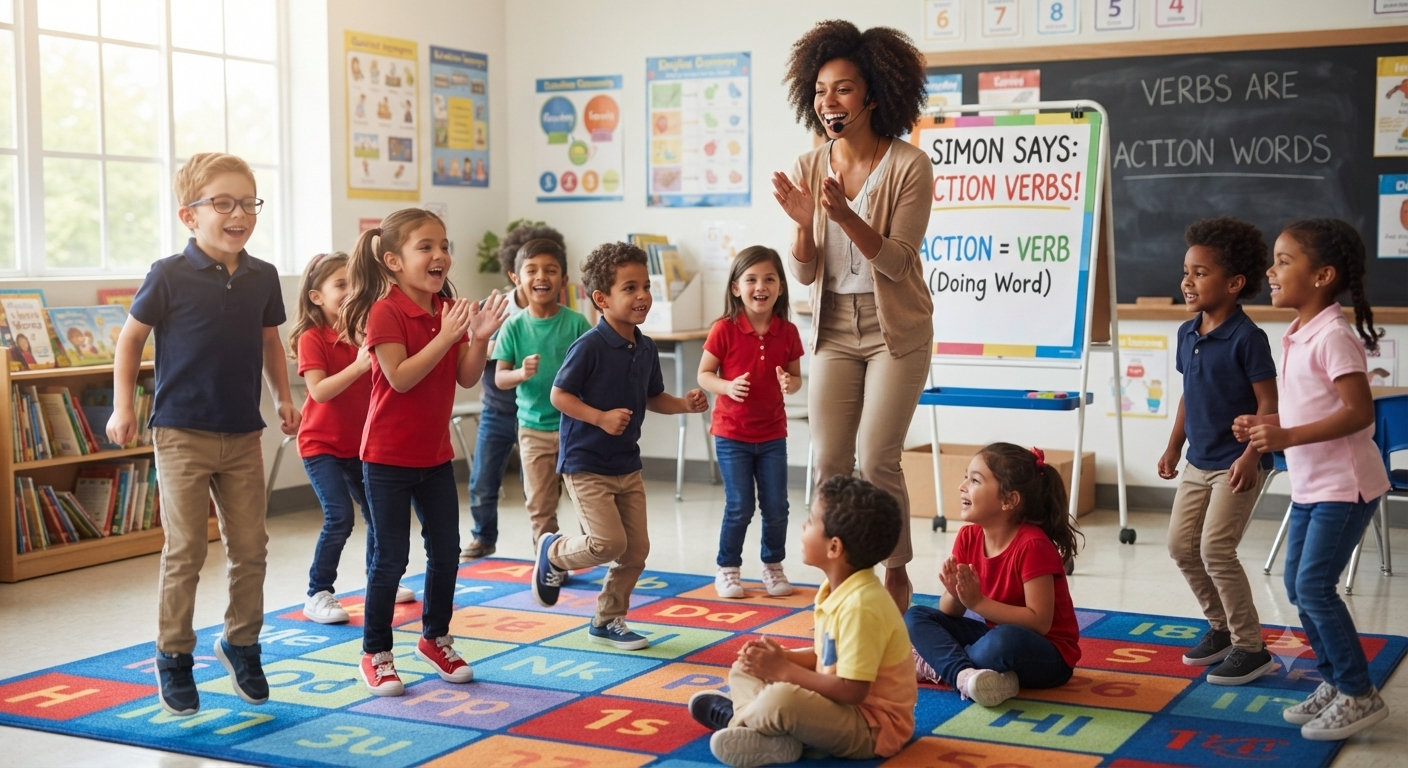
Play a game such as “Simon Says” or a local action call. Use definite action words like run, jump, dance, clap, or sit. Ask children to perform each action as they hear it. Explain, “Every time you move your body, you are doing an action. In grammar, we call these doing words verbs.”
2. Everyday Actions Around Us
Observe current activities in your home or classroom to make verbs relatable.
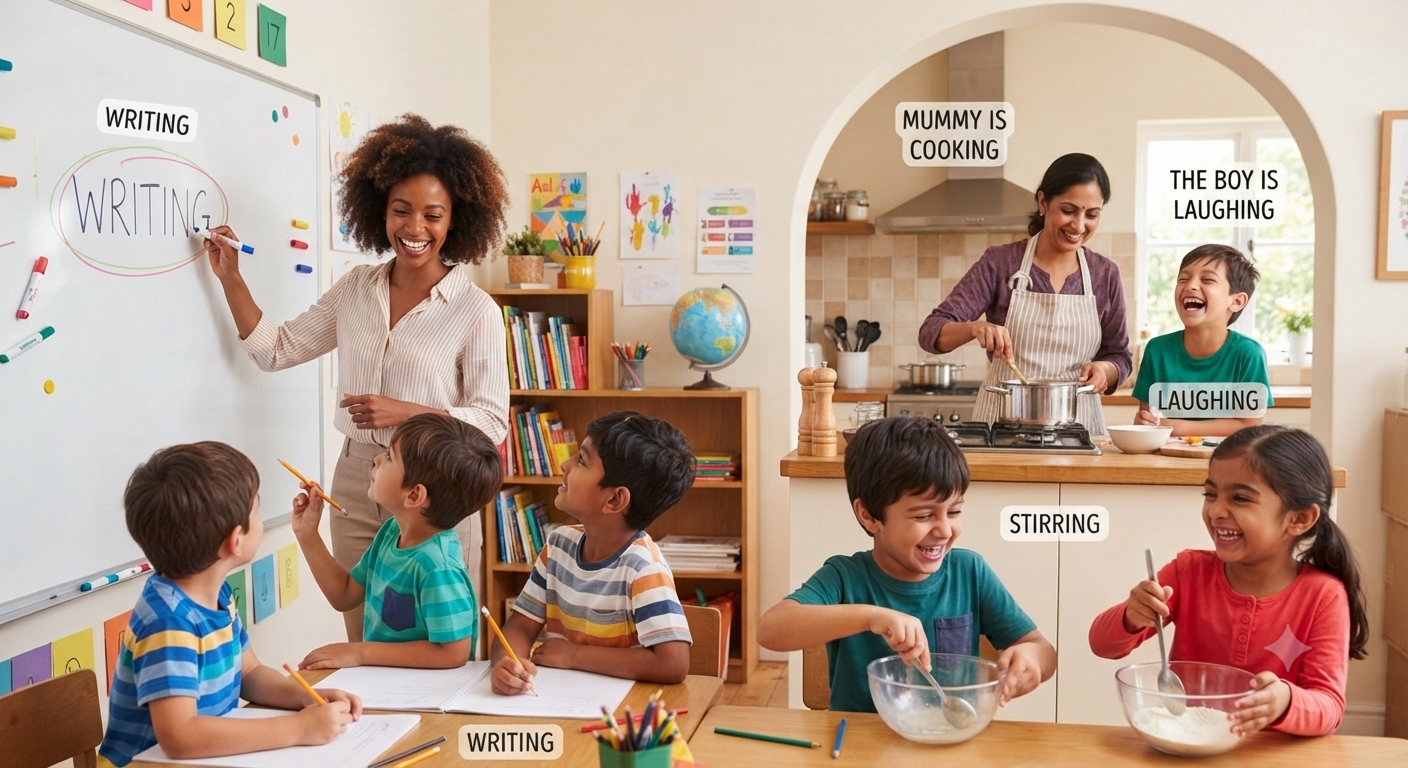
Point out actions people are performing. For example, say, “Mummy is cooking,” “The boy is laughing,” or “The teacher is writing.” Highlight the action word in each statement. Ask children to mimic actions, such as stirring while cooking or moving a pencil while writing. This connects the word to familiar experiences.
3. Animal Movements
Many children are familiar with active animals in their surroundings. Animals provide excellent examples of action words.
Ask the class how different animals move. For example, say, “Can a dog run?” “Can a bird fly?” or “Can a frog hop?” Encourage children to act out the animal movements. Explain that run, fly, and hop are action words, or verbs, that describe what the animal is doing.
4. Acting Out Stories
Make storytime interactive by changing simple sentences into physical activities.
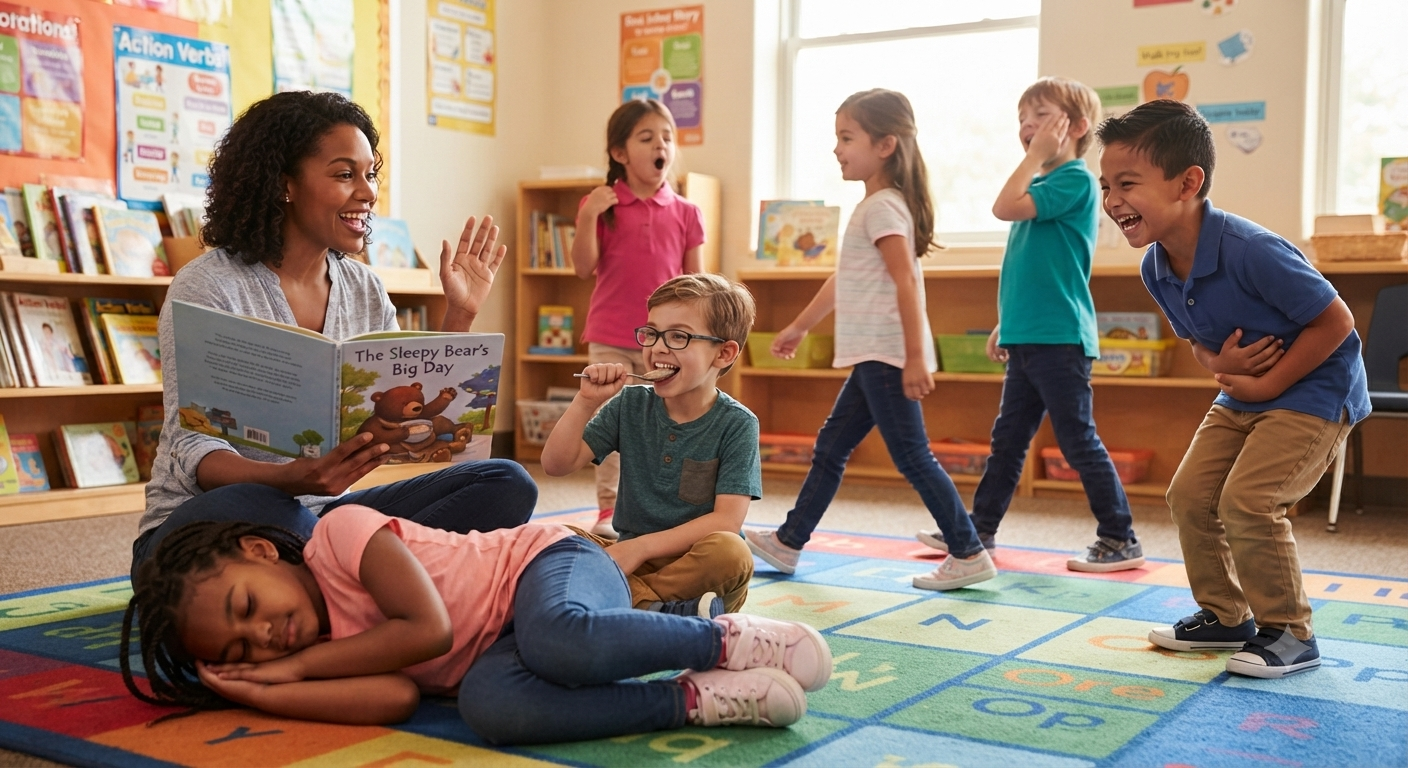
Read a short story aloud. When you reach an action word such as sleep, eat, walk, or laugh, pause and have the children act it out together. This approach makes grammar concrete. Students see that stories are filled with action, making helping verbs more meaningful.
At the kindergarten level, verbs should not be memorised from textbook meanings. Using movement, animal games, and daily observations helps children understand that verbs are the words that bring our realities and stories into motion.
Teaching kindergarteners verbs the right way
The Grammar Fundamental Course
Whether you teach young students or want to improve your own skills, this course gives you a clear plan and interactive tools to make grammar easier.
Core Skills:
- Basics: Master the alphabet, vowels, and consonants.
- Grammar: Learn nouns, pronouns, adjectives, verbs, and prepositions.
- Writing: Gain expertise in sentence structure, word order, and punctuation.
Why Take the Course?
Whether you teach children or want to improve your grammar, this course makes learning grammar simple and fun.
- Easy teaching methods: Follow a clear, step-by-step guide to teach grammar without stress.
- Complete foundation: Learn everything from A to Z, including the parts of speech and how to build strong sentences.
- Ready-to-use activities: Save time with hands-on, interactive lessons that children will enjoy.
- Better writing: Improve your sentence structure and punctuation to communicate more clearly and confidently.
- Earn a certificate: Get an official certificate to show your new skills and success.