

Currently Empty: 0.00$
Child Development
Effectively Teaching Capitalization to Kindergarteners
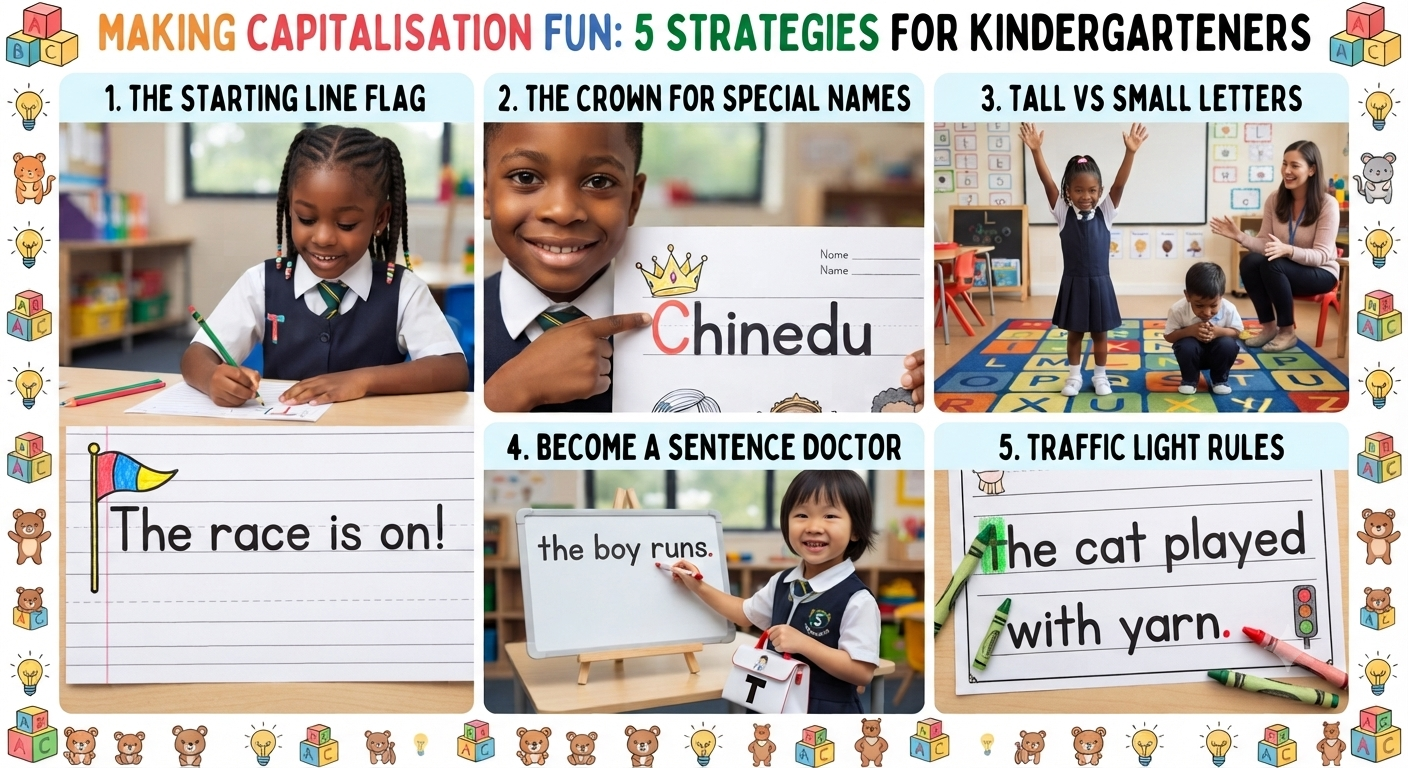
For many young learners, learning the English alphabet is an exciting experience. However, capitalisation can be confusing for kindergarteners. Rather than presenting it as a grammar rule, consider teaching it as a sign of respect or a signal, which makes the concept easier for children to understand.
Below are effective strategies for teaching capitalisation at home or in the classroom, using familiar examples from daily life.
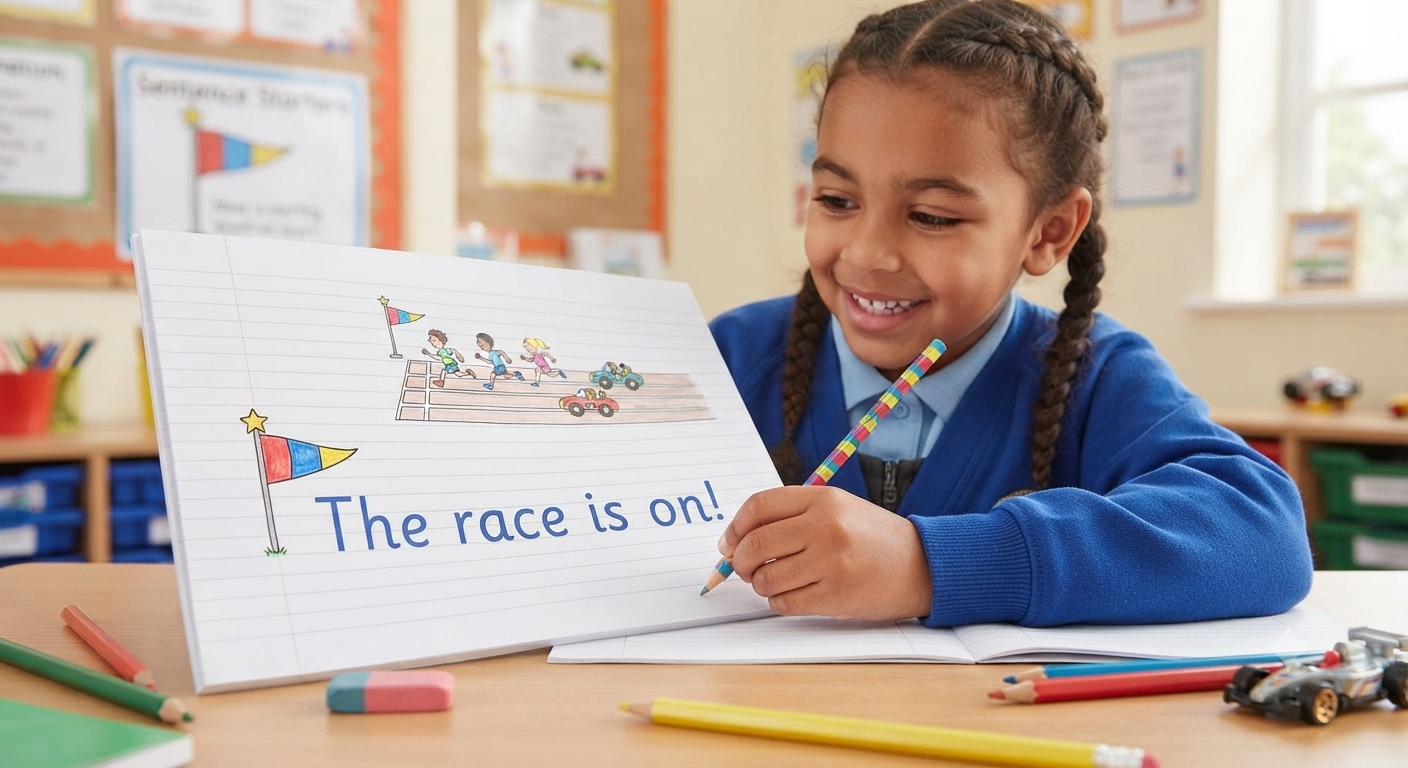
1. The Starting Line Flag
Encourage children to view each sentence as a race that starts with a flag. Just as a race needs a starting flag, a sentence begins with a capital letter. When writing together, draw a small, colourful flag at the left margin and explain that it signals the start of the sentence. Emphasise that the starting flag is always a ‘Big’ or ‘Capital’ letter. This visual cue helps children remember where to begin writing.
2. The Crown for Special Names
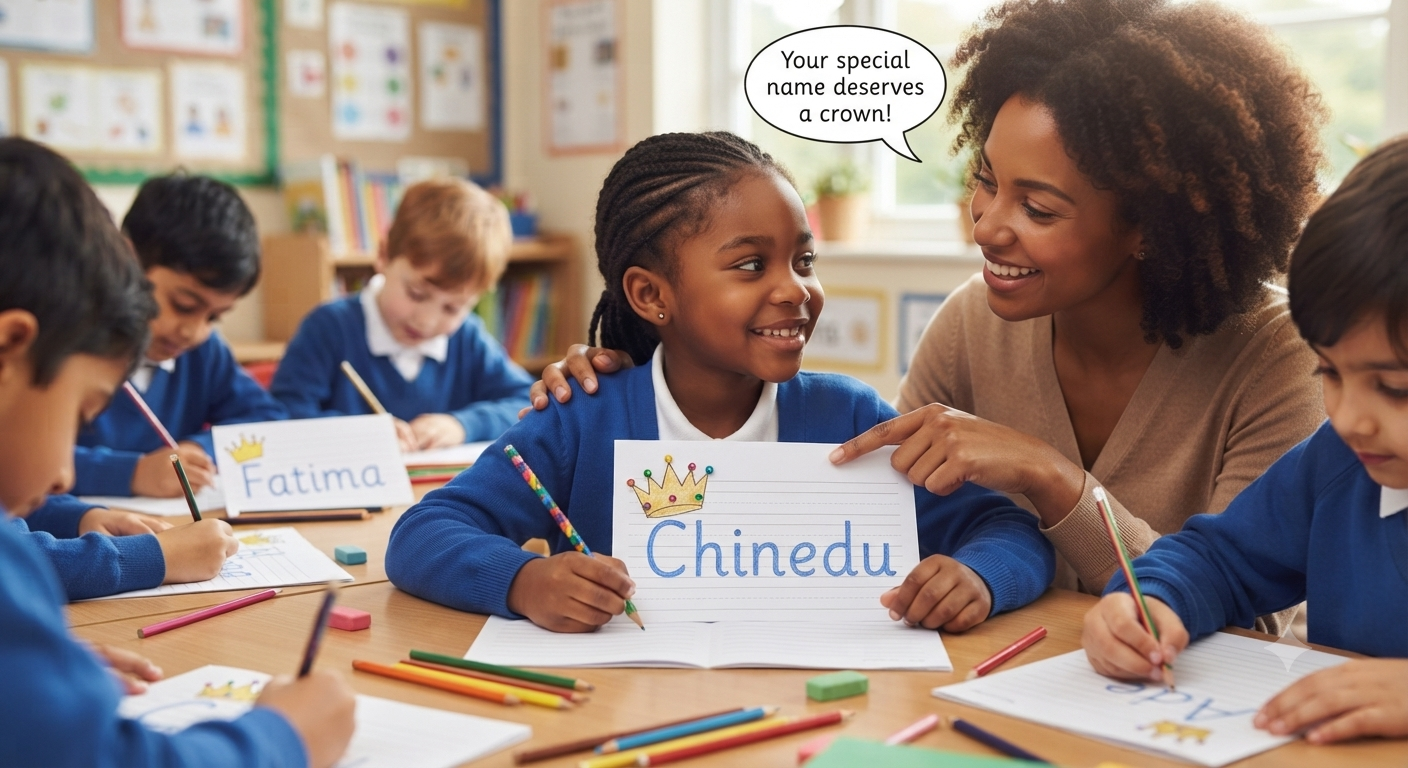
Names such as Chinedu, Fatima, or Ade are deeply personal and meaningful. Use this to teach the capitalisation of proper nouns. When writing a child’s name, draw a small crown over the first letter and explain that their name is special and deserves a crown, which represents the capital letter. This approach helps children remember the rule by associating it with something important to them.
3. Tall vs Small Letters
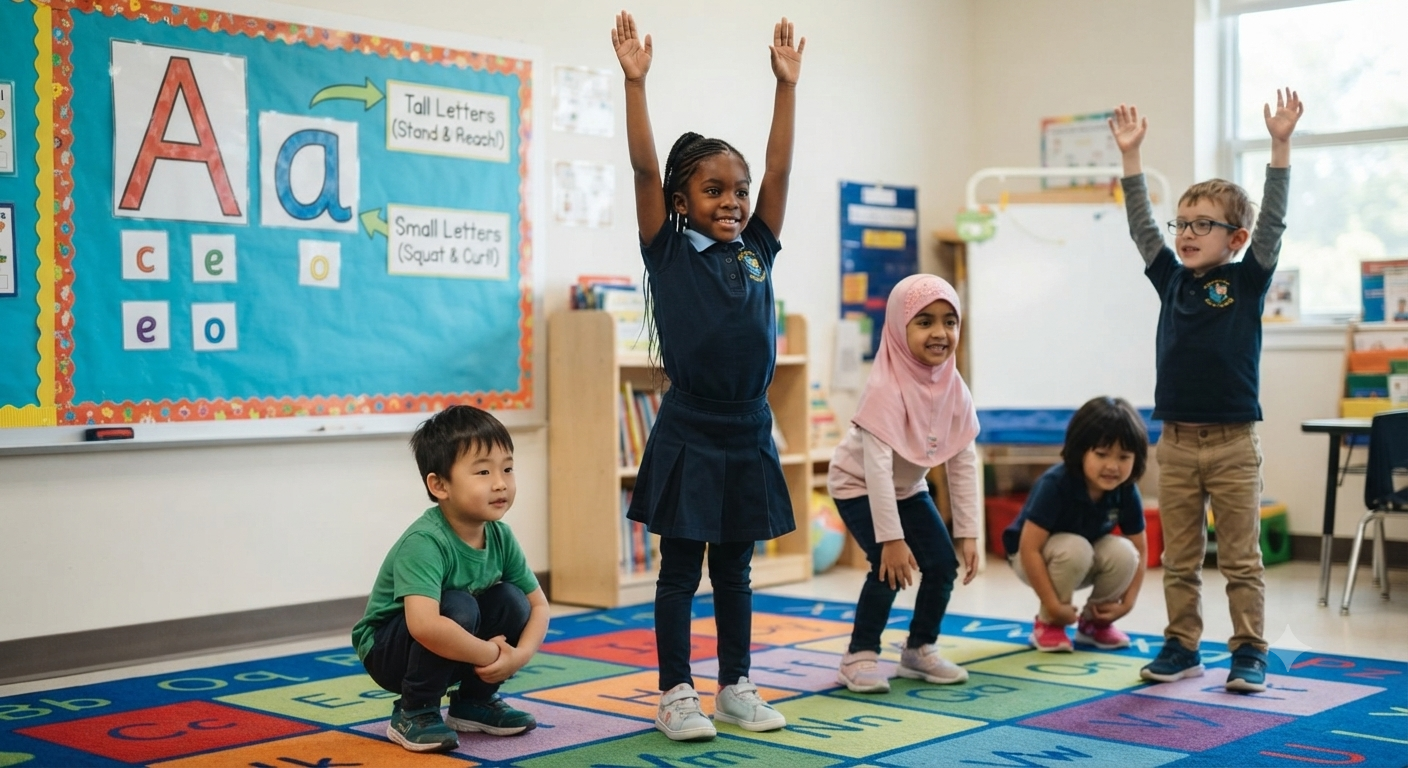
Kindergarteners benefit from movement-based learning. Capital letters are taller than most lowercase letters, such as a, c, e, and o. Ask children to stand and raise their arms to represent a capital letter, then squat to represent a lowercase letter. This physical activity reinforces the difference between capital and lowercase letters.
4. Become a Sentence Doctor
Children enjoy activities where they can fix mistakes. Turn grammar into a game by writing a simple sentence in all lowercase letters, such as “the boy runs.” Invite a child to be a Sentence Doctor and correct the sentence by replacing the first letter with a capital letter. This approach encourages participation and helps children take ownership of the rule.

5. Traffic Light Rules
We see traffic lights and signs every day on our roads. Use this to teach the beginning and end of sentences.
- Green Light (Start): The Capital Letter is the green light. It tells the reader to “Go!”
- Red Light (Stop): The period (the dot at the end) is the red light. It tells the reader to “Stop!”
Highlight the capital letter at the beginning of a sentence with a green crayon and the period at the end with a red crayon.
The Key Takeaway
At this age, avoid lecturing and instead focus on sparking imagination. Use visual and engaging methods, such as a “crown” for names, a “starting flag” for sentences, or a “green light” to begin reading. By relating capitalisation to everyday experiences, you help children build a strong foundation for confident, lifelong writing.
Teaching kindergarteners capitalisation the right way
The Grammar Fundamental Course
Whether you teach young students or want to improve your own skills, this course gives you a clear plan and interactive tools to make grammar easier.
Core Skills:
- Basics: Master the alphabet, vowels, and consonants.
- Grammar: Learn nouns, pronouns, adjectives, verbs, and prepositions.
- Writing: Gain expertise in sentence structure, word order, and punctuation.
Why Take the Course?
Whether you teach children or want to get better at grammar yourself, this course makes learning grammar simple and fun.
- Easy teaching methods: Follow a clear, step-by-step guide to teach grammar without stress.
- Complete foundation: Learn everything from A to Z, including the parts of speech and how to build strong sentences.
- Ready-to-use activities: Save time with hands-on, interactive lessons that children will enjoy.
- Better writing: Improve your sentence structure and punctuation so you can communicate more clearly and confidently.
- Earn a certificate: Get an official certificate to show your new skills and success.