
Currently Empty: 0.00$
Uncategorized
Importance of Alphabet Identification for Nursery 2 pupils
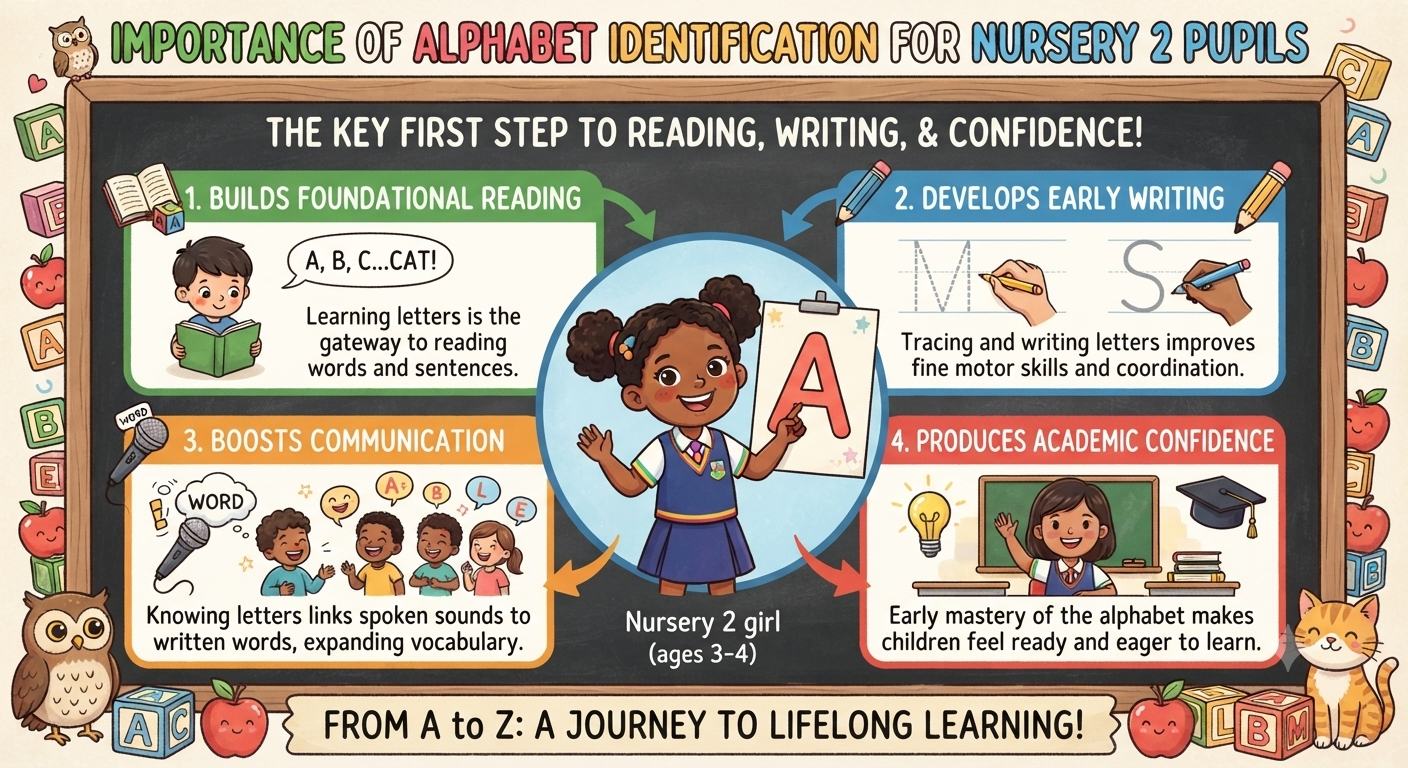
A child’s path to literacy starts with learning to recognise the letters of the alphabet. For Nursery 2 children, usually aged three or four, alphabet identification is more than just memorising 26 letters. It is the key first step to reading, writing, communicating, and doing well in school. This article explains why alphabet identification matters for Nursery 2 pupils.
Builds Foundational Reading
Alphabet identification is the first step in learning to read. Before children can read words or sentences, they need to recognise each letter. When a Nursery 2 child can see the letter A, say its name and sound, and do the same for other letters, they are learning the basics of language.
Early Writing and Fine Motor Skills
Secondly, it develops early writing and fine motor skills. As pupils learn to identify M or S, they can also trace and write it. This activity strengthens their hand muscles and improves hand-eye coordination.
Boost Communication and Vocabulary
Knowing the alphabet also helps children communicate and learn new words. Letters are symbols for sounds and ideas. When Nursery 2 pupils can recognise letters, they start to link spoken words with written ones. This helps them learn more words and speak more clearly.
Cognitive Development and Memory
Learning the alphabet also supports children’s thinking and memory. Recognising all 26 letters means noticing differences in shape, sound, and order. This helps improve their memory, focus, and problem-solving skills.
Produces Children’s Academic Confidence
When children learn the alphabet early, they feel more confident at school. Those who start Primary 1 already knowing their letters are more comfortable and ready to learn. They can join in when the teacher starts teaching phonics and reading, answer questions, and enjoy learning.
In summary, learning the alphabet opens the door to reading and writing for Nursery 2 children. It gets them ready to read, write, speak, and think. Teachers and parents should make this stage fun by using songs, games, flashcards, stories, and play. When a child can proudly say, “This is A, and this is B”, they are not just naming letters. They are starting their journey to becoming confident readers, writers, and lifelong learners.
Master Grammar Fundamentals
Whether you are teaching kindergarteners or refining your own skills, this course provides a clear blueprint and interactive tools to make grammar effortless.
Core Skills:
- Basics: Master the alphabet, vowels, and consonants.
- Grammar: Learn nouns, pronouns, adjectives, verbs, and prepositions.
- Writing: Gain expertise in sentence structure, word order, and punctuation.
🎓 Bonus: Receive a completion certificate upon finishing the course.