

Currently Empty: 0.00$
Grammar
Reforming Education in Nigeria – Grammar for Kids
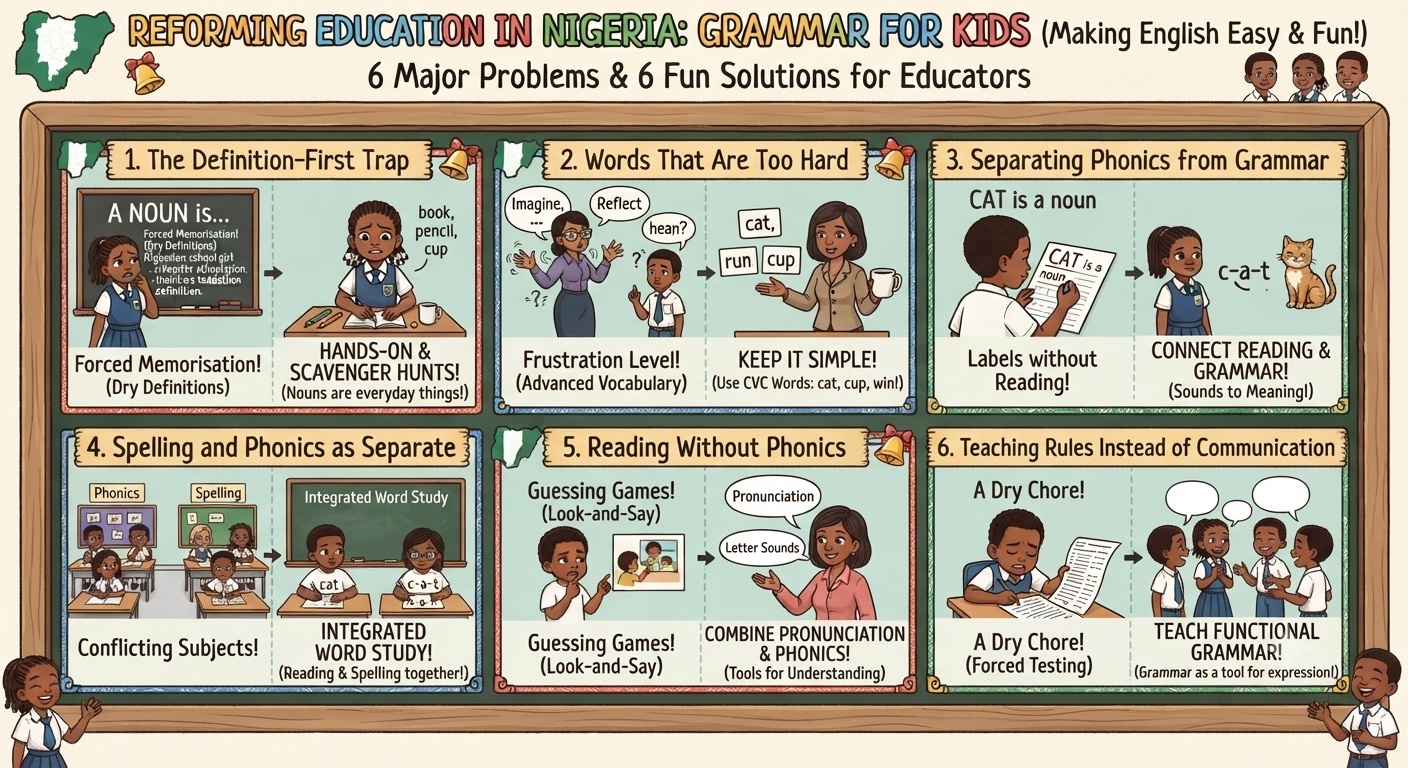
The English language is a tool for student self-expression, but many Nigerian students find grammar scary and confusing. The problem isn’t that students aren’t trying; it’s that traditional methods focus on memorising dry rules rather than using the language to talk and write. For educators working with Nigerian students, this disconnect comes down to 6 major problems in the classroom.
Problem 1: The “Definition-First” Trap (Forced Memorisation)
Teachers make kids memorise definitions word-for-word (like “A noun is the name of a person, place, or thing”). Kids focus entirely on repeating words rather than understanding how they actually work.
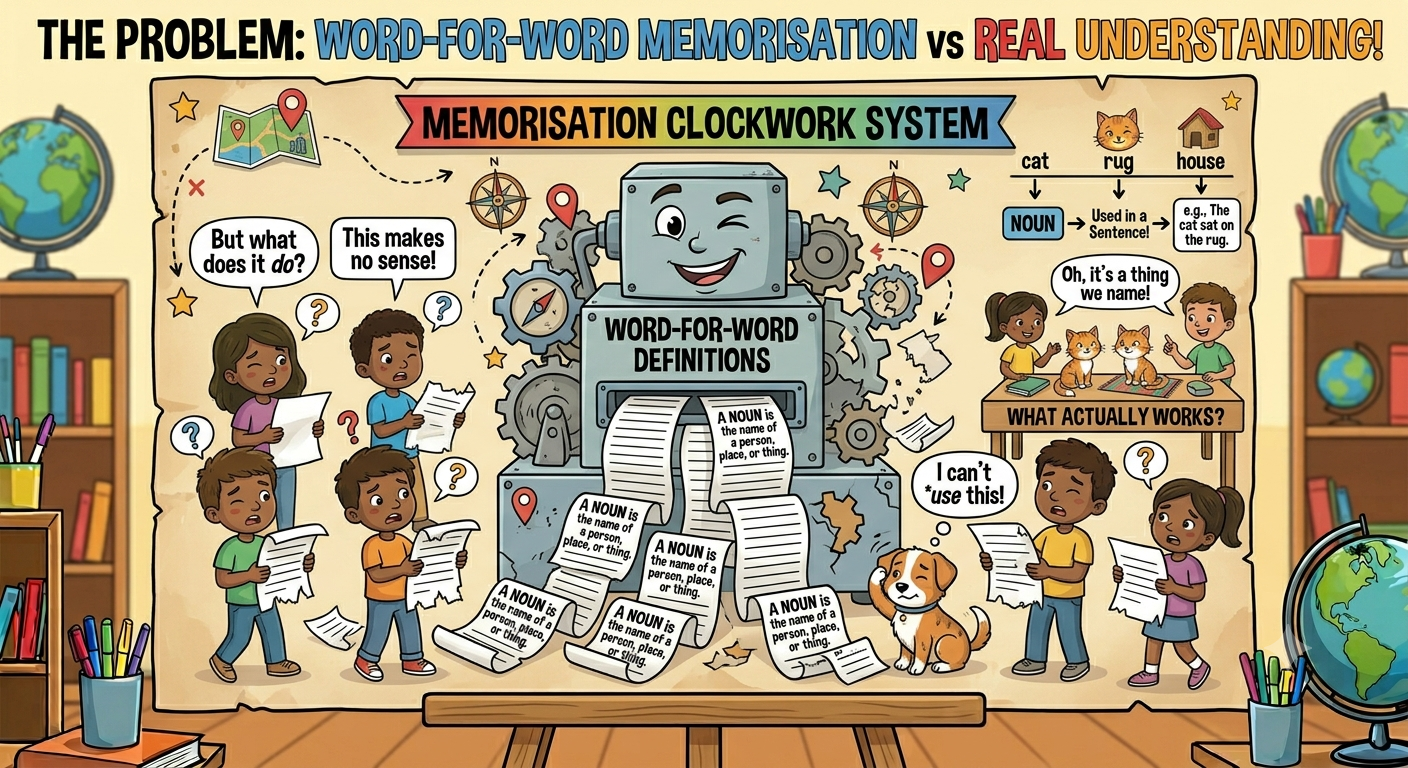
- The Solution: Use hands-on activities, such as Scavenger Hunts, tailored to your students. Put real items, such as a book, a pencil, or a cup, on a table. Let students touch and explore these objects to show that nouns are the everyday things around them.
Problem 2: Using Words That Are Too Hard (Frustration Level)
Teachers often use advanced, confusing words to explain simple ideas, pushing children to the point of frustration, where they shut down and become confused.
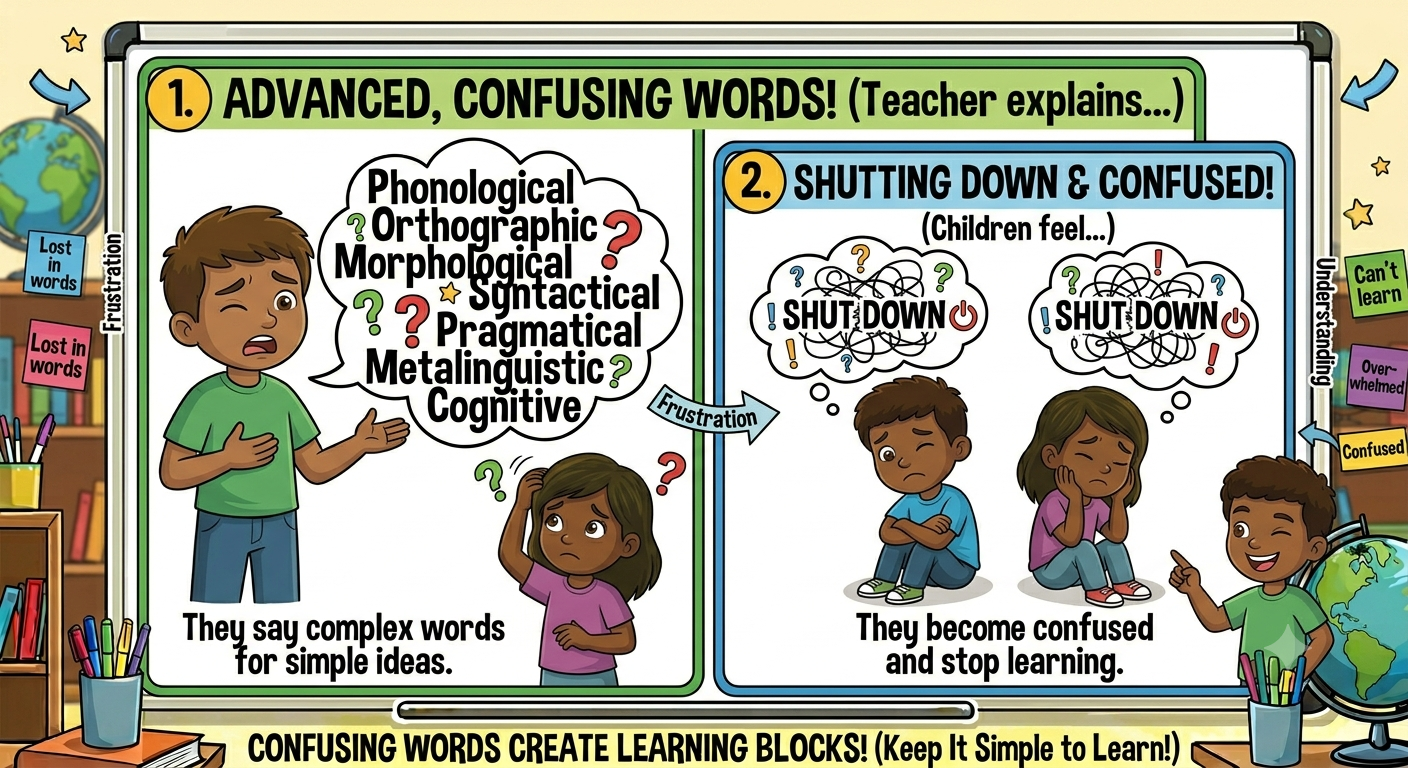
- The Solution: Keep it simple! For early learners, swap out heavy words like “imagine” or “reflect” for simple, familiar CVC (Consonant-Vowel-Consonant) words such as cat, run, cup, and win.
Problem 3: Separating Phonics from Grammar
Teachers teach grammar rules but forget to teach kids how to read the words they use. If phonics teaches that c-a-t spells cat, but grammar just says “Cat is a noun,” kids learn labels without actually knowing how to read.
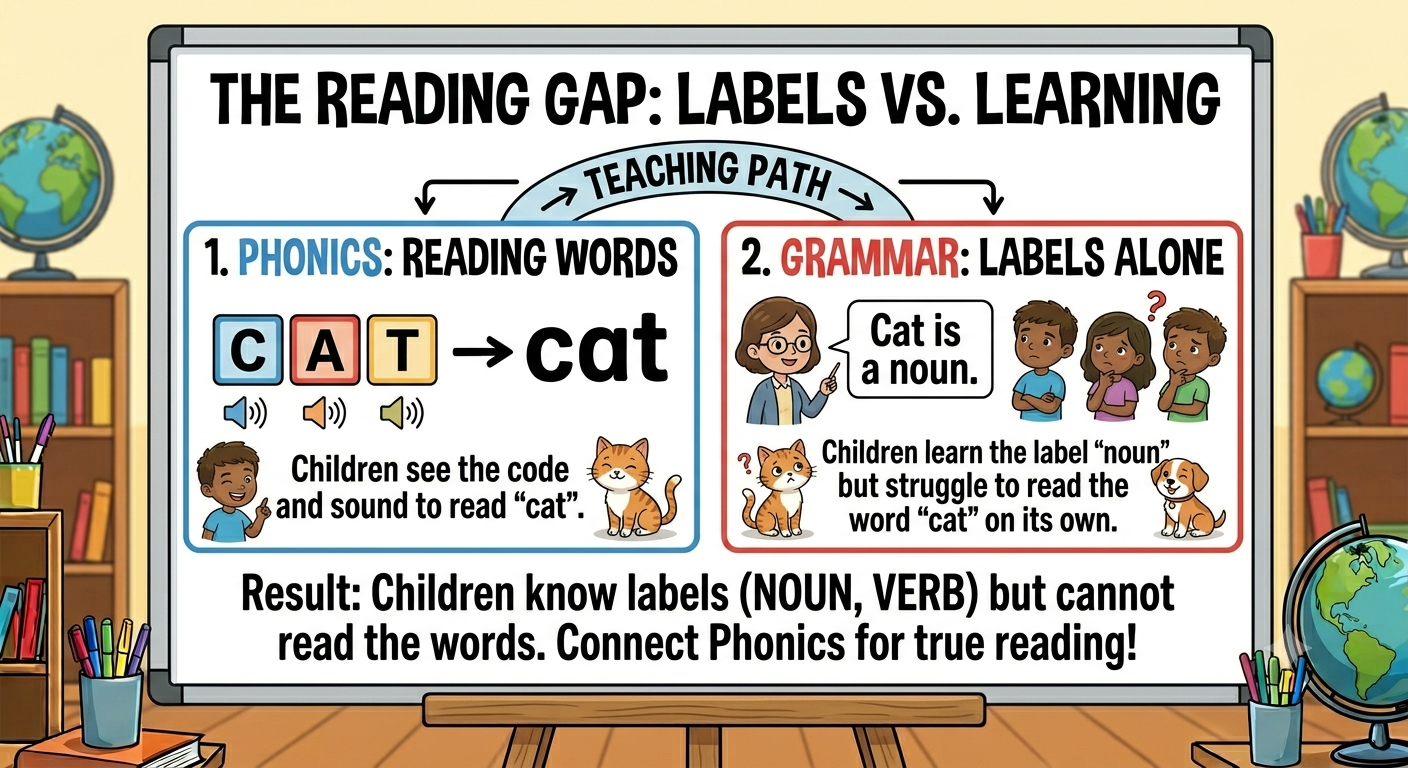
- The Solution: Connect reading and grammar for young learners from the start. In nursery and early primary school, build reading skills and grammar together so children connect the sound of a word to its meaning.
Problem 4: Teaching Spelling and Phonics as Separate Subjects
Treating phonics and spelling as two different subjects confuses children. Phonics is reading (breaking sounds apart), and spelling is writing (putting sounds together). They are two sides of the exact same coin.
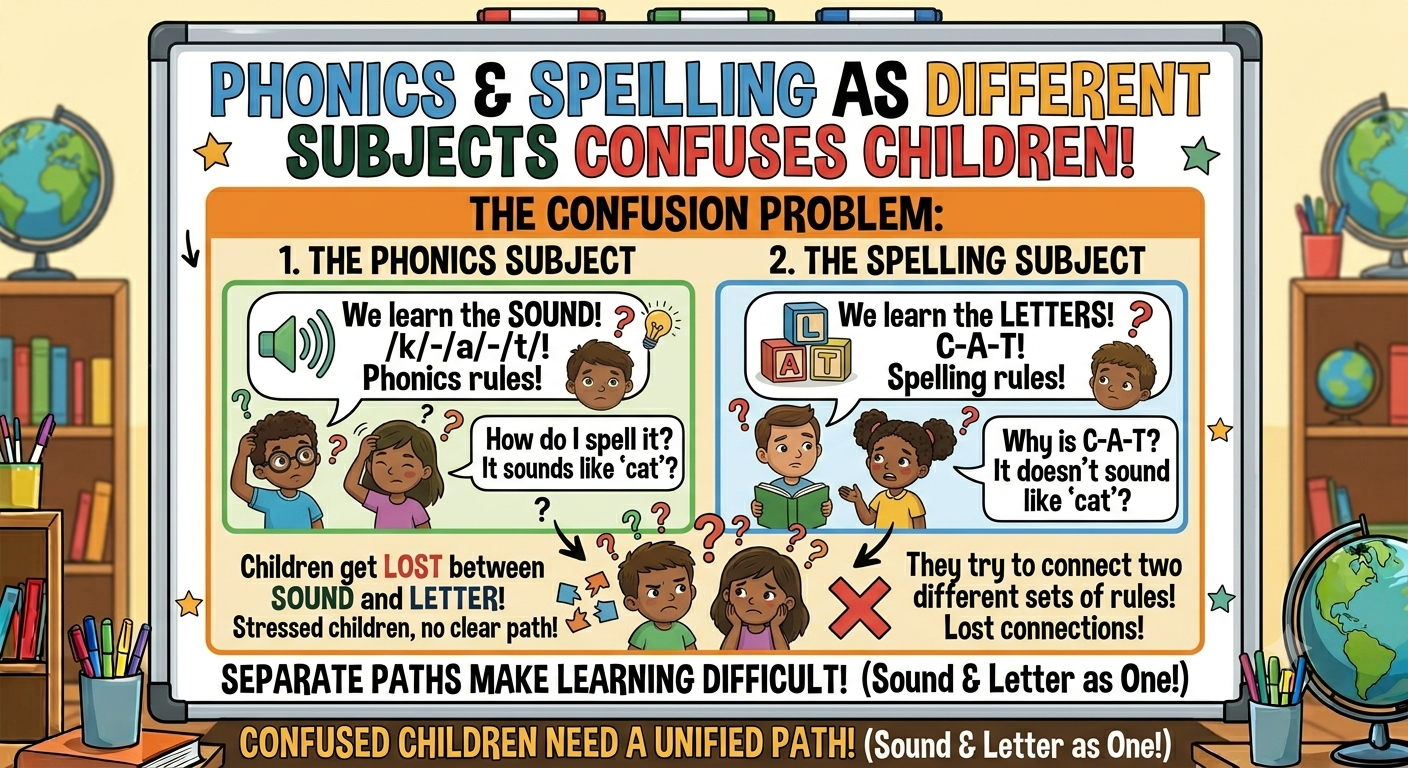
- The Solution: Use an Integrated Word Study approach with your students. Teach reading and spelling together. When a child learns a new sound for reading, have them immediately use that same sound to spell a word.
Problem 5: Teaching Reading Without Phonics and Diction
Teaching kids to read by just guessing whole words from pictures (the “look-and-say” method) is like building a house on sand. Without phonics (letter sounds) and diction (clear pronunciation), kids struggle to speak clearly and read unfamiliar words later on.
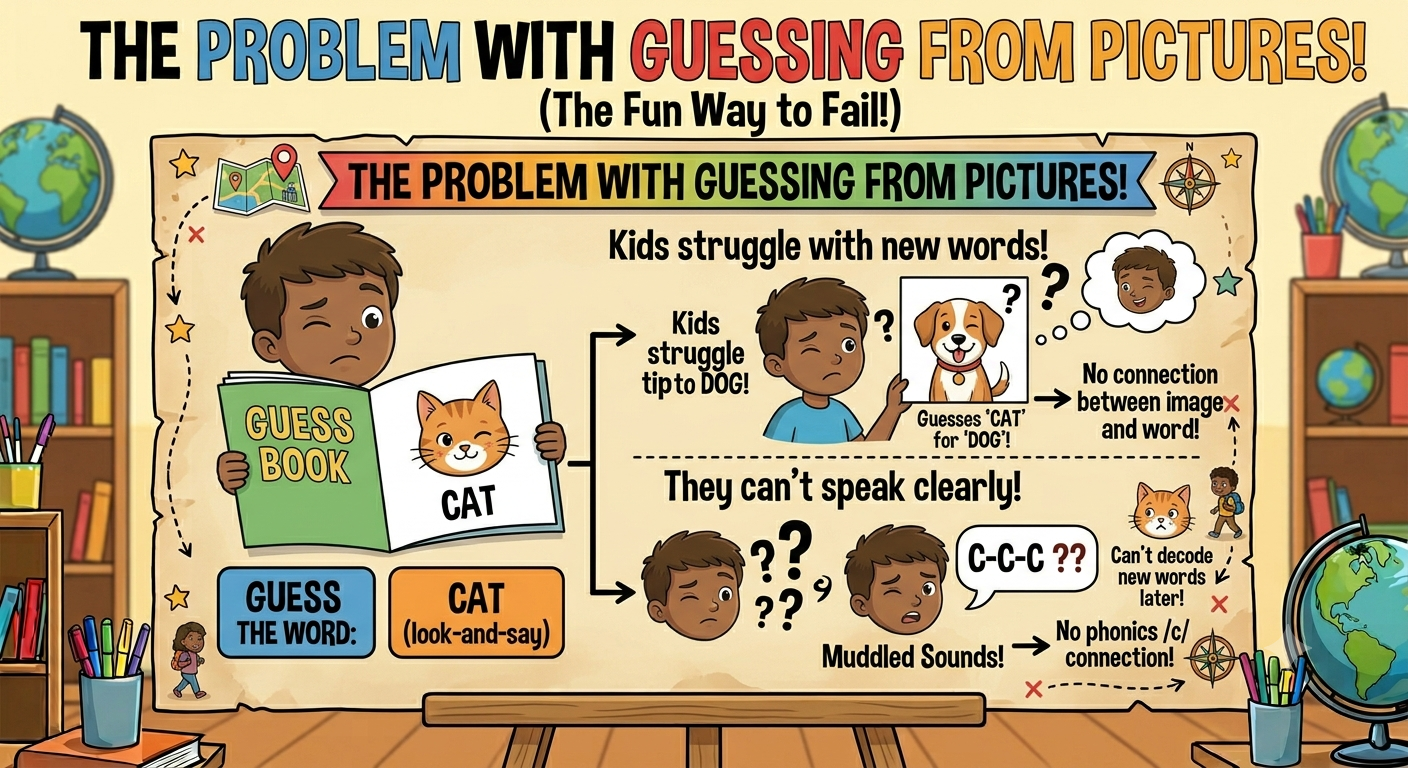
- The Solution: Combine pronunciation and letter sounds with comprehension in your teaching. Good pronunciation and strong phonics are the tools that help students achieve true understanding.
Problem 6: Teaching Rules Instead of Communication
Grammar is often taught just to pass a worksheet test, making it feel dry and useless. When you strip away real-world communication, grammar feels like a chore rather than a toolkit for expression.
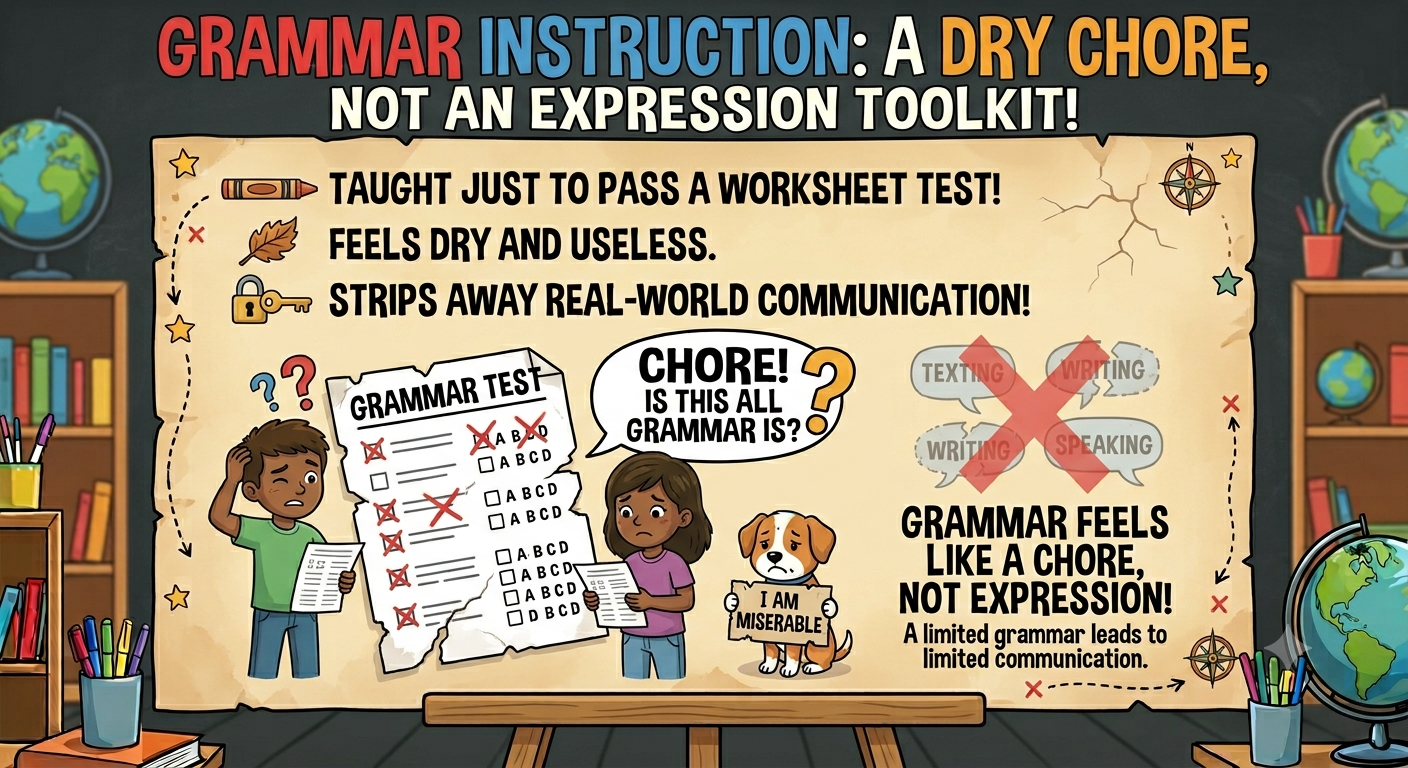
- The Solution: Teach Functional Grammar. Shift the focus from memorising strict rules to showing kids how grammar helps them share their thoughts clearly. Teach language in context so they see it as a tool for building exciting, real-world conversations, showing them that grammar’s true purpose is to help them become highly effective communicators.