
Currently Empty: 0.00$
Grammar
Teaching Kindergarteners Vowels and Consonants
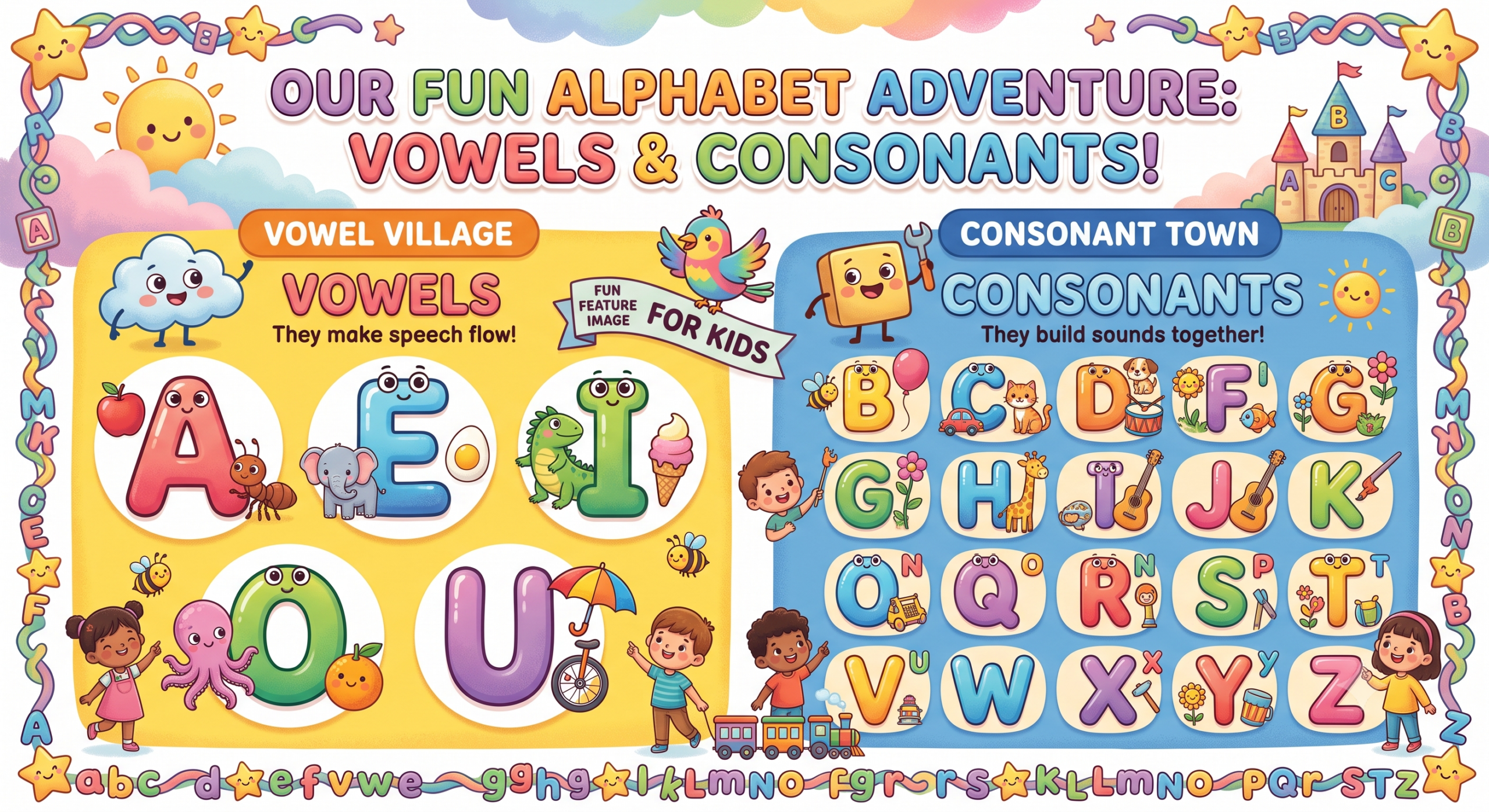
Teaching kindergarteners vowels and consonants apart is a key step in early literacy. Instead of just memorising, encourage them to notice how speaking feels. This helps them understand how language works.
The Two Groups: Vowels and Consonants
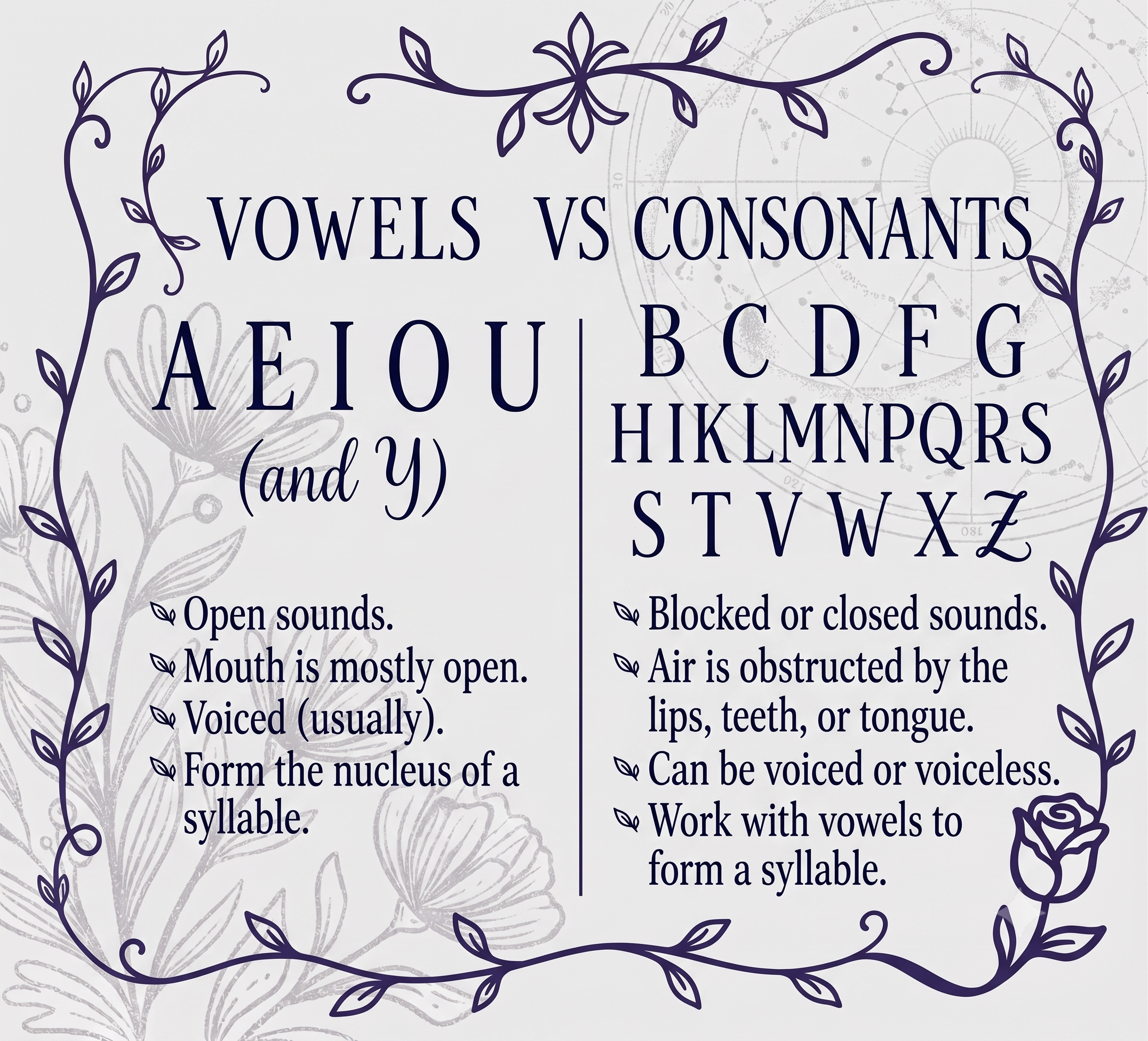
To help young learners sort letters, ask them to pay attention to how their mouths move when they talk.
The Special Case: The Letter Y
The letter Y is a bit of a trickster because it can act as both a vowel and a consonant, making it a fascinating topic for kindergarteners.
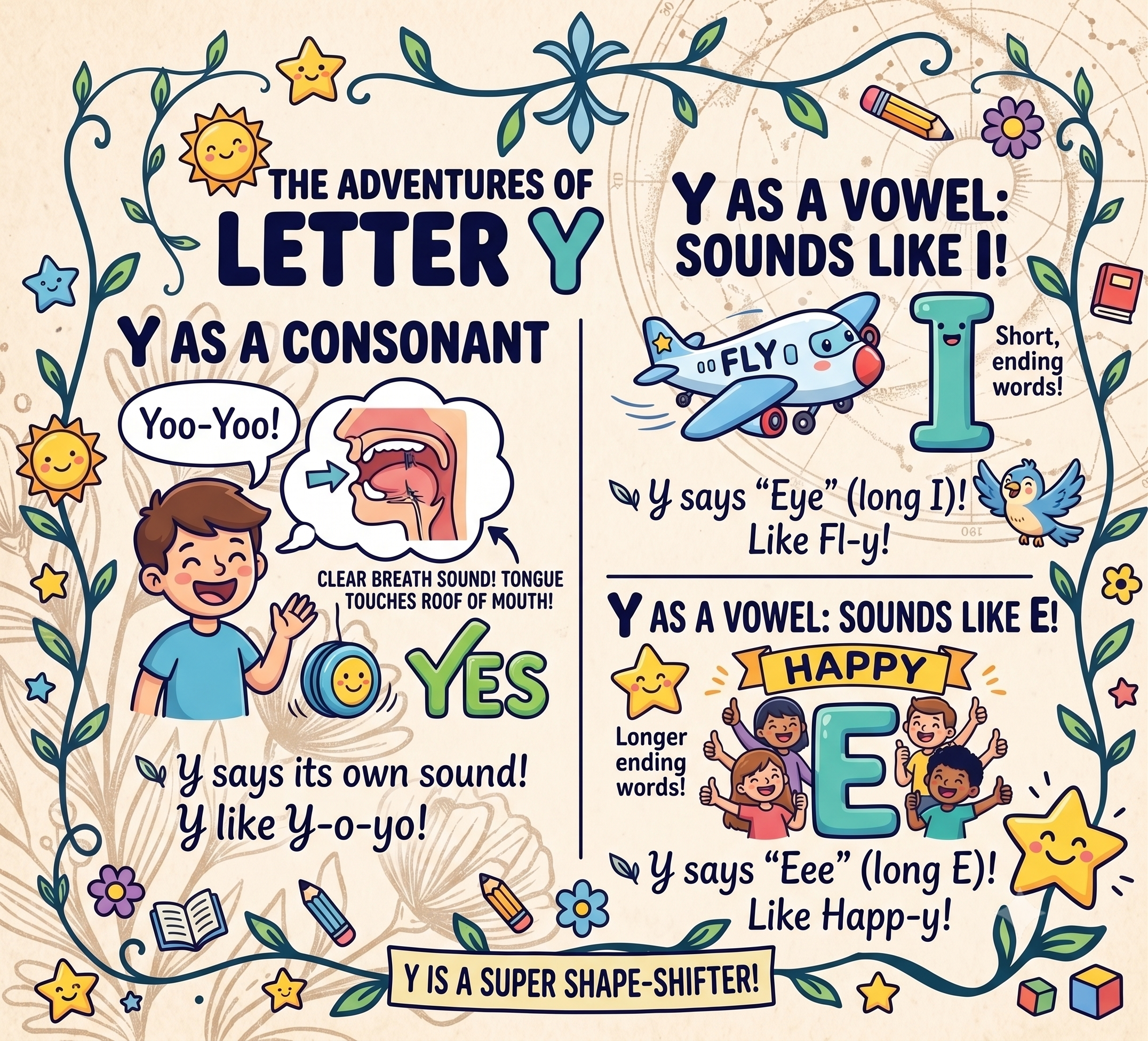
- Y as a Consonant: When Y appears at the beginning of a word (like yo-yo or yes), it acts as a consonant. It makes a clear, breath-stopping sound that needs the tongue to touch the roof of the mouth.
- Y as a Vowel: When Y appears at the end of a word (like fly), it sounds like the letter I (the long I sound).
- Y as a Vowel: When Y appears at the end of a word (like happy), it sounds like the letter E (the long E sound).
Teach students that Y changes its job depending on where it lives in a word. This flexibility makes it unique among the other letters.
Why Vowels and Consonants Matter
It is important for young learners to know the difference between vowels and consonants for a few reasons:
- Foundation for spelling: Every syllable in English has at least one vowel sound. Knowing vowels helps children find the main part of each word, which makes it easier to sound out and spell new words.
- Word connectors: Vowels join consonants together to form words. Without vowels, it would be hard to put consonants together and speak clearly.
- Decoding skills: When children learn how consonants stop the air, they can say letter sounds more clearly. This helps them tell words that sound alike apart.
- Building confidence: When students learn that letters have different roles, like making open or stopping sounds, they stop guessing and start figuring out words. This shift from memorising to understanding helps them become confident readers and writers.
Teaching kindergarteners vowels and consonants the right way
The Grammar Fundamental Course
Whether you teach young students or want to improve your own skills, this course gives you a clear plan and interactive tools to make grammar easier.
Core Skills:
- Basics: Master the alphabet, vowels, and consonants.
- Grammar: Learn nouns, pronouns, adjectives, verbs, and prepositions.
- Writing: Gain expertise in sentence structure, word order, and punctuation.
Why Take the Course?
Whether you teach children or want to get better at grammar yourself, this course makes learning grammar simple and fun.
- Easy teaching methods: Follow a clear, step-by-step guide to teach grammar without stress.
- Complete foundation: Learn everything from A to Z, including the parts of speech and how to build strong sentences.
- Ready-to-use activities: Save time with hands-on, interactive lessons that children will enjoy.
- Better writing: Improve your sentence structure and punctuation so you can communicate more clearly and confidently.
- Earn a certificate: Get an official certificate to show your new skills and success.