
Currently Empty: 0.00$
Child Development
Teaching Letter Identification to Kindergarteners
For young learners, the world of letters offers a chance to enter a new universe. Being able to recognise and name the letters easily is the basic foundation for both reading and writing. Nigerian teachers and parents want to move away from simple memorisation and instead promote a form of learning that is hands-on, interesting, and related to everyday life.
The following strategies show how effectively to teach kindergarteners to identify the alphabet.
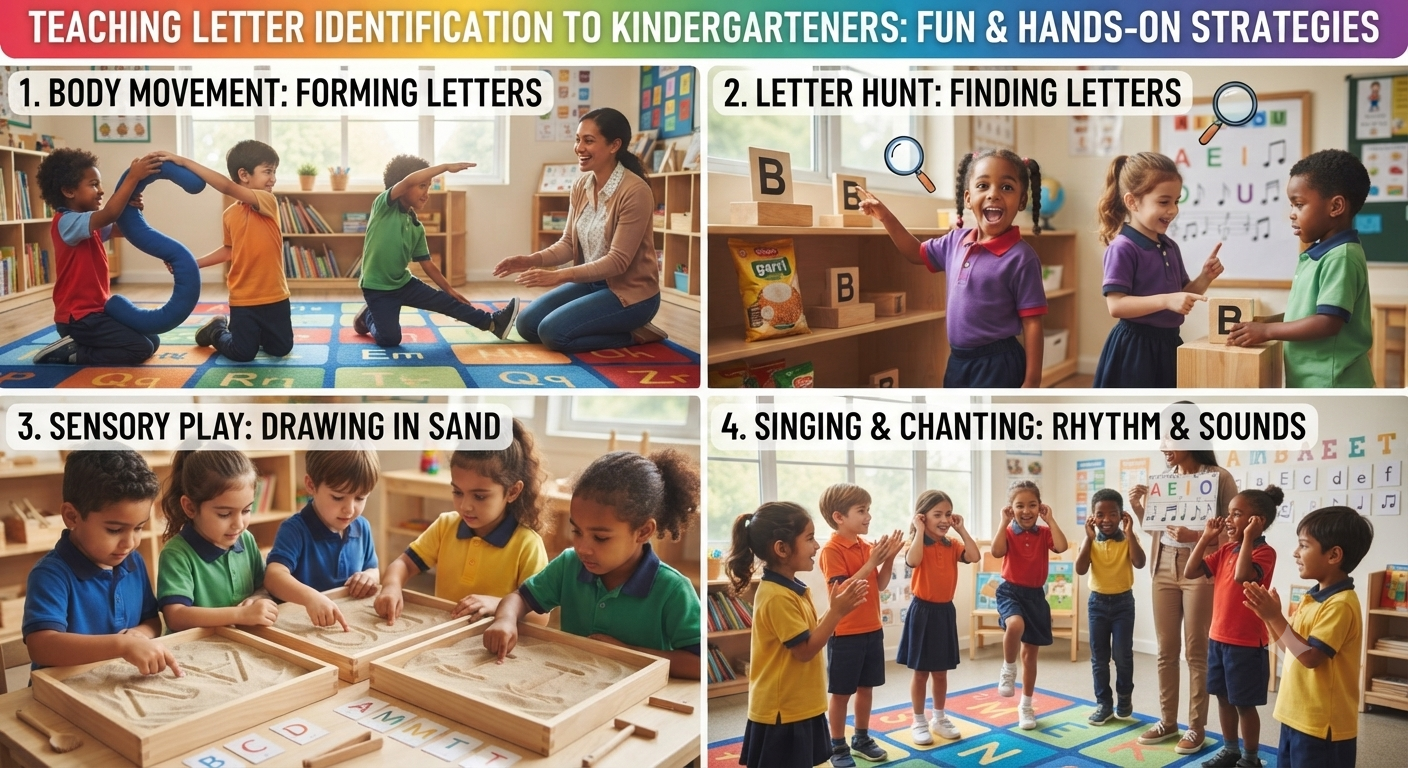
1. Bring the letters to life using body movements.
Children usually learn best by taking part with their whole bodies. Instead of just having them recognise the letters by sight, encourage them to physically show what the alphabet looks like.
Name a letter, for example ‘S’ or ‘L’, and ask the children to form that letter using their bodies, their arms or their fingers. It is also effective to have children work in pairs to construct more complex letters. This method of learning reinforces the letter’s shape in their physical memory and enables children to recognise it more easily when it is written.

2. Letter Hunt
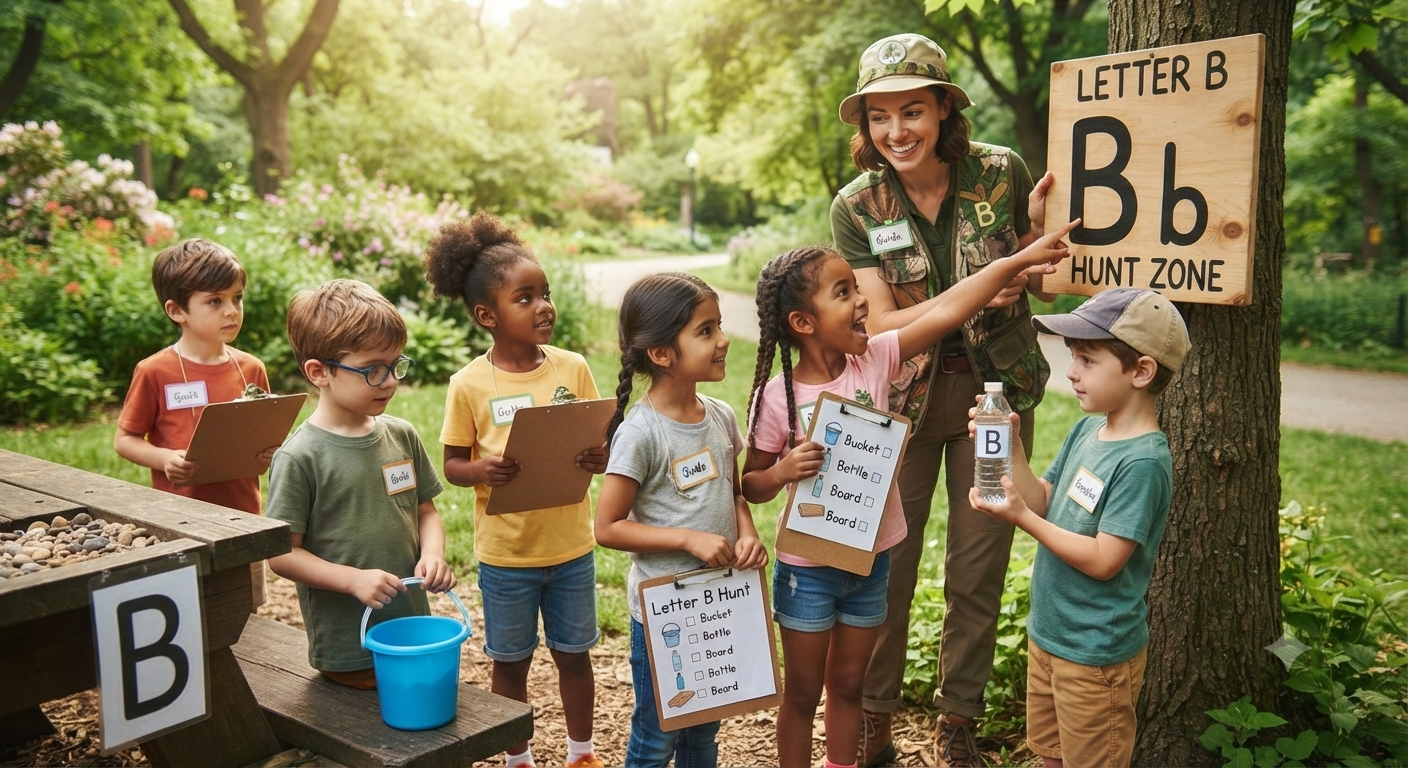
Letters are commonly found in everyday settings, such as on street signs and the labels attached to food packaging. Turn the home or school environment into a large area for discovery.
Take the children on a guided walk and give them a ‘target letter’ for the day, for instance the letter B. Tell them to look out for this letter in all sorts of places, such as on a bucket, a bottle, or a board. The activity connects what they learn in the classroom with real-life situations and enables the children to see that letters can be used as practical tools for labelling their surroundings.
3. Drawing in Sand
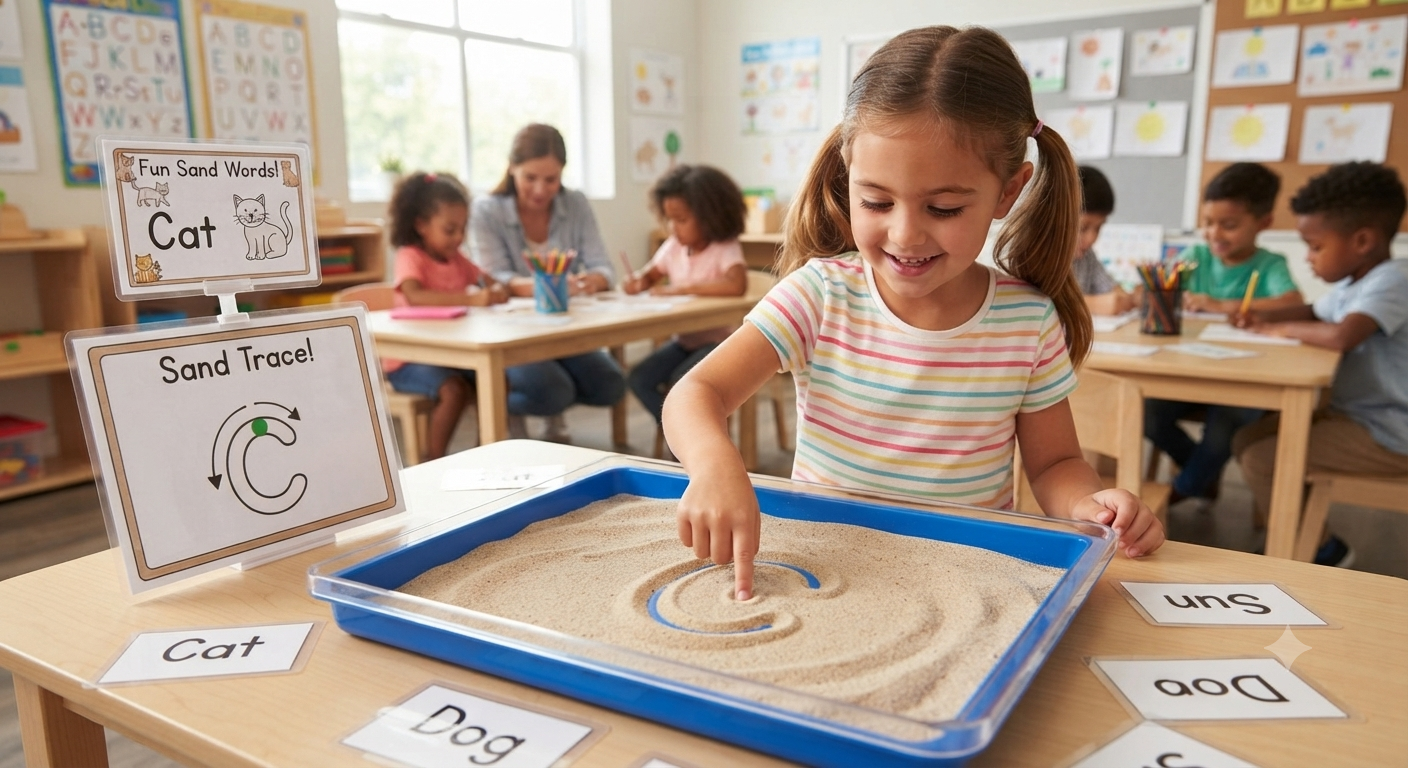
Hands-on activities help promote cognitive development and improve letter recognition; however, traditional pen-and-paper writing can frustrate kindergarteners, as their fine motor skills are still developing.
Spread a thin layer of clean sand or flour over a flat tray or a clean surface. Say a letter aloud and tell the children to use their index fingers to trace its shape in the tray. The sensory feedback from moving through the grains helps reinforce correct letter formation and visual recognition, making the practice both engaging and effective.
4. Singing and Chanting
Children are greatly interested in rhythm, music, and call-and-response storytelling. When music is incorporated into teaching, it improves children’s ability to remember letter sounds and names.
Create interactive chants with clapping. Call out a letter name and its sound. The children respond with a set hand motion or a stomp. These hearing and rhythm activities use several brain pathways. They help children remember letter names quickly during reading practice.

It is possible to carry out alphabet identification without having to remain inactive for long periods. By incorporating physical movement, sensory materials, and outdoor exploration, alphabet learning becomes an engaging activity. Children learn the letters naturally and with enthusiasm when they interact with them physically and musically.
Teaching kindergarteners alphabet identification the right way
The Grammar Fundamental Course
Whether you teach young students or want to improve your own skills, this course gives you a clear plan and interactive tools to make grammar easier.
Core Skills:
- Basics: Master the alphabet, vowels, and consonants.
- Grammar: Learn nouns, pronouns, adjectives, verbs, and prepositions.
- Writing: Gain expertise in sentence structure, word order, and punctuation.
Why Take the Course?
Whether you teach children or want to improve your grammar, this course makes learning grammar simple and fun.
- Easy teaching methods: Follow a clear, step-by-step guide to teach grammar without stress.
- Complete foundation: Learn everything from A to Z, including the parts of speech and how to build strong sentences.
- Ready-to-use activities: Save time with hands-on, interactive lessons that children will enjoy.
- Better writing: Improve your sentence structure and punctuation to communicate more clearly and confidently.
- Earn a certificate: Get an official certificate to show your new skills and success.