

Currently Empty: 0.00$
Child Development
Teaching Pronouns to Kindergarteners
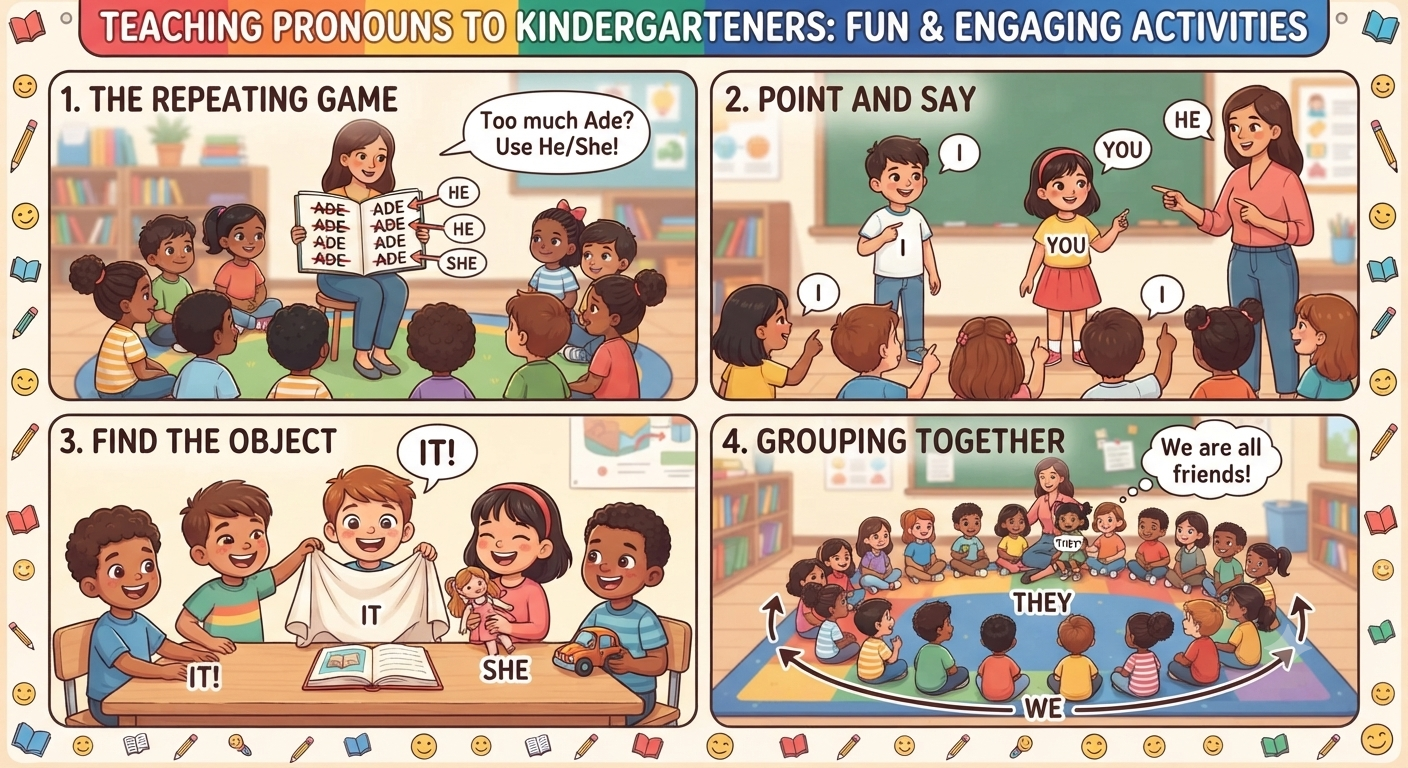
For young learners, understanding parts of speech can seem challenging. When teaching pronouns such as he, she, it, they, and we, emphasise that these words replace names to avoid repetition.
Below is an engaging, activity-based approach to teaching pronouns effectively at home or in the classroom.
1. The Repeating Game
Children often repeat names as they learn to identify people. Use this tendency to introduce the purpose of pronouns.
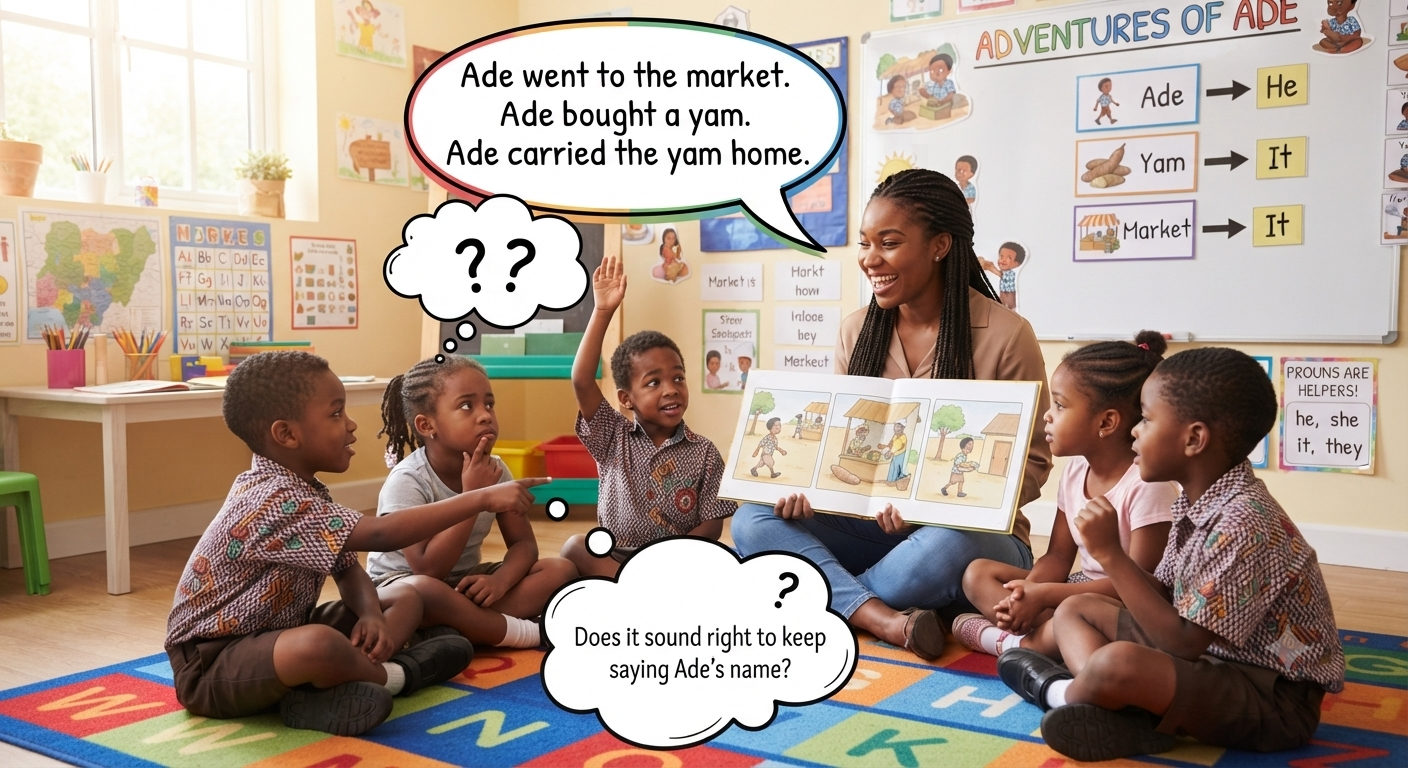
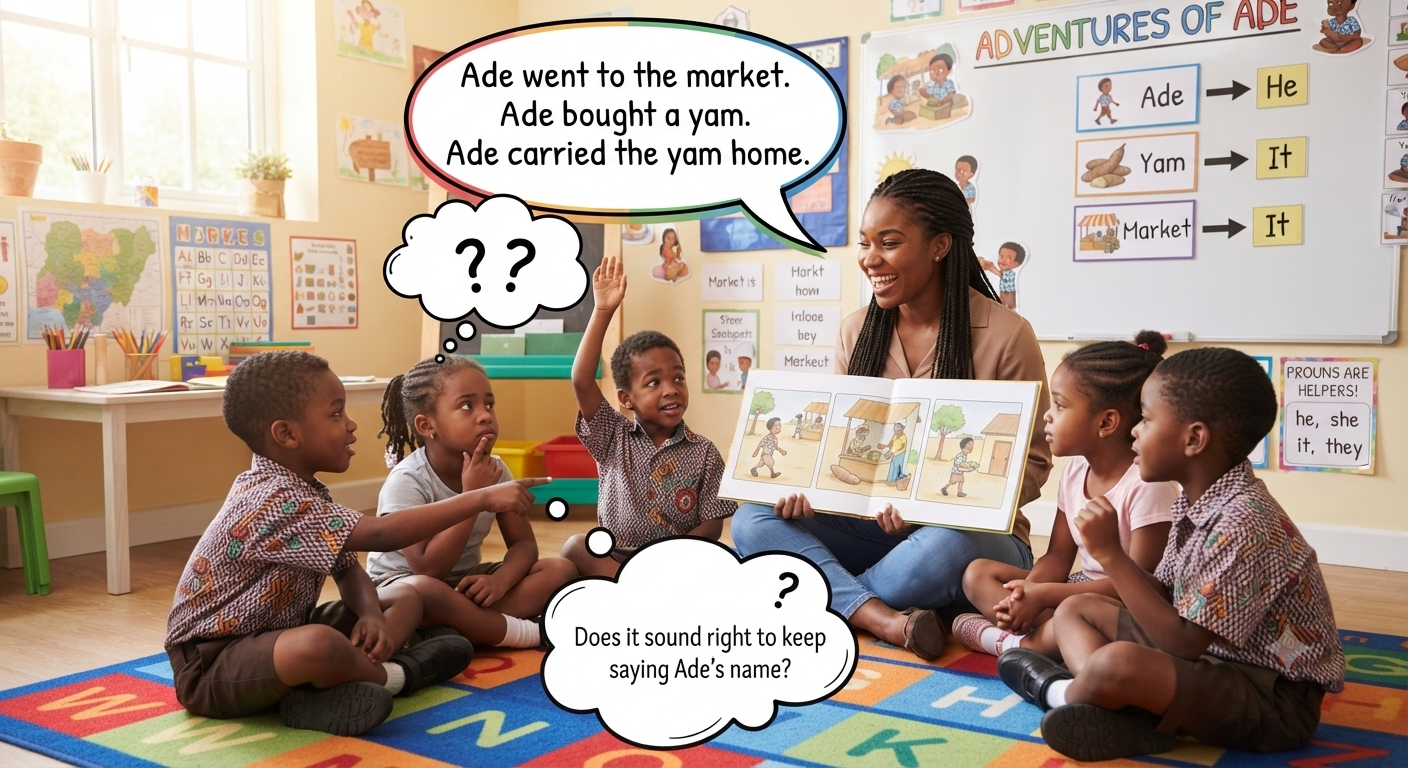
Tell a brief story aloud, intentionally repeating a child’s name. For example: “Ade went to the market. Ade bought a yam. Ade carried the yam home.”
Ask the class, “Does it sound right to keep saying Ade’s name every time?” Most will say no. Explain that pronouns such as he or she help us avoid unnecessary repetition.
2. Point and Say
Pronouns reflect perspective. To teach he, she, and I, incorporate physical movement and pointing.
Ask a boy and a girl to stand at the front of the class. Point to the boy and have the class say, “He.” Point to the girl and say, “She.” oint to yourself and say, “I.”
Have students point to themselves and say “I,” then point to a friend and say “You.” This activity demonstrates that pronouns change based on the speaker and listener.
3. Find the Object
Turn pronoun identification into a discovery activity using people and objects in the room.
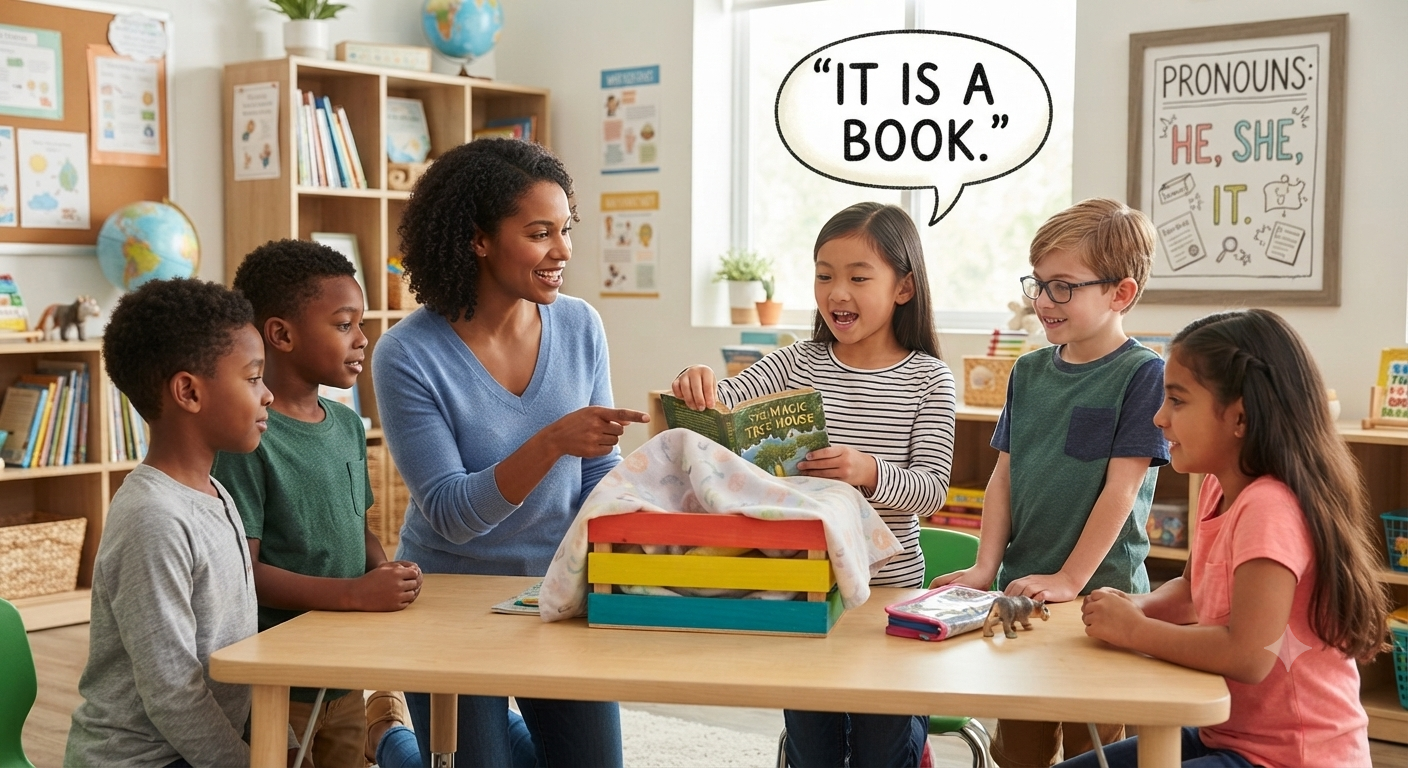
Hide a familiar object, such as a book or pencil, under a cloth. Tell a student to find it. When they reveal the object, encourage them to say, “It is a book.” rather than repeating the object’s name.
Use he or she for people. For objects and animals, teach students to use it.
4. Grouping Together
Transitioning from singular to plural pronouns involves recognising groups rather than individuals.
Tell one child to step forward. Point to the child and say, “He” or “She.” Then, have three children stand together as a group. The class points to them and says, “They.” Finally, gather all the children in a circle with you and say, “We.”
This grouping demonstrates that “we” includes the speaker and listeners, while “they” refers to others. It turns abstract grammar concepts tangible and visual.
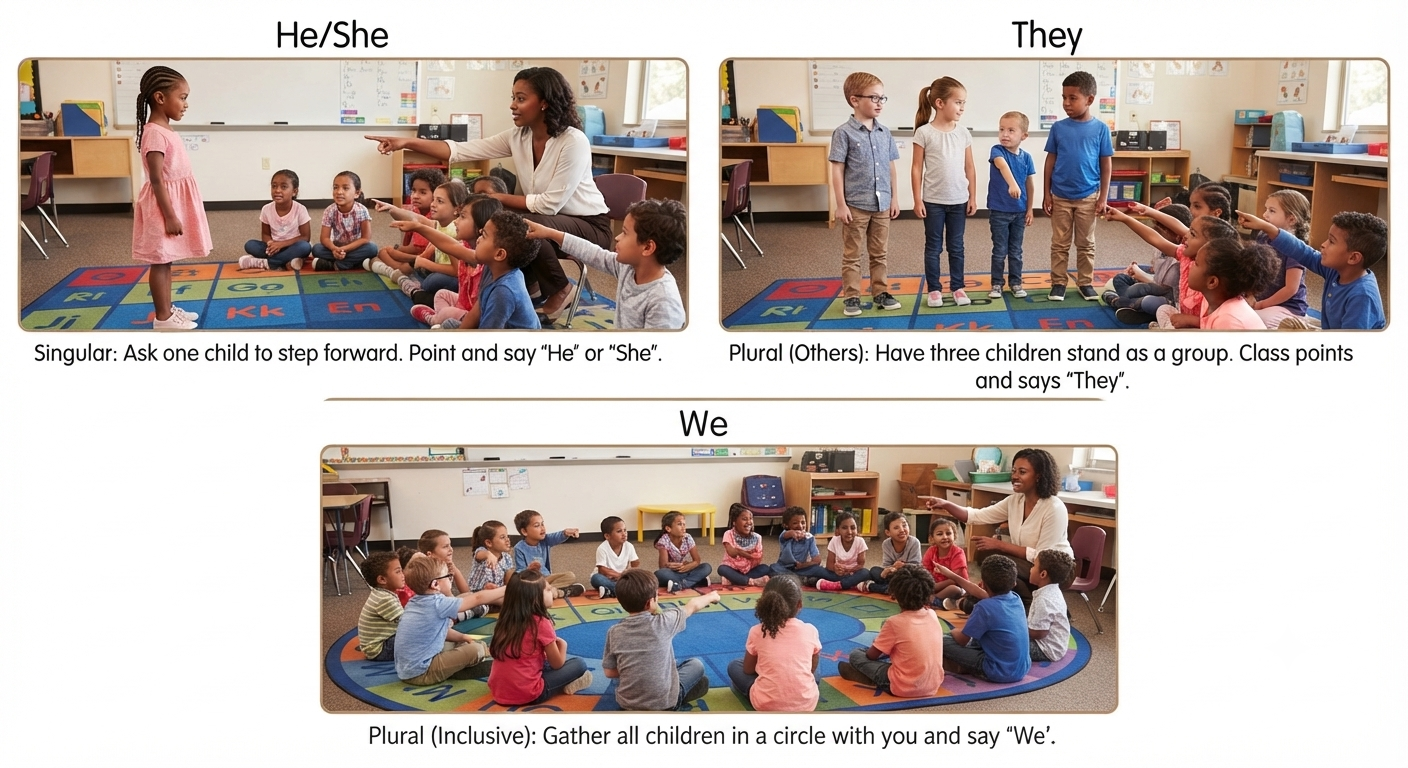
At the kindergarten level, pronouns do not require complex definitions. Through storytelling, interactive games, and group activities, children learn that pronouns are practical tools for everyday communication.
Teaching kindergarteners pronouns the right way
The Grammar Fundamental Course
Whether you teach young students or want to improve your own skills, this course gives you a clear plan and interactive tools to make grammar easier.
Core Skills:
- Basics: Master the alphabet, vowels, and consonants.
- Grammar: Learn nouns, pronouns, adjectives, verbs, and prepositions.
- Writing: Gain expertise in sentence structure, word order, and punctuation.
Why Take the Course?
Whether you teach children or want to improve your grammar, this course makes learning grammar simple and fun.
- Easy instruction techniques: Follow a clear, step-by-step guide to teach grammar without stress.
- Complete foundation: Learn everything from A to Z, including the parts of speech and how to build strong sentences.
- Ready-to-use activities: Save time with hands-on lessons that children will enjoy.
- Better writing: Improve your sentence organisation and punctuation to communicate more articulately and with greater assurance.
- Earn a certificate: Get an official certificate to show your new skills and success.